A long range electric scooter is not simply a scooter with a large battery. Two electric scooters with similar battery capacities can deliver different real-world ranges because of differences in cruising speed, motor efficiency, vehicle design, tire resistance, payload, and riding conditions.
For importers, wholesalers, distributors, and fleet operators, understanding these factors is essential when comparing manufacturers and selecting models for different markets. A scooter advertised with a high maximum range may not deliver the same results under daily commuting, passenger transport, or delivery conditions.
This guide focuses on seated electric scooters and moped-style electric scooters, rather than standing kick scooters. It explains the factors that affect electric scooter range, how different testing conventions influence advertised figures, and what B2B buyers should verify before placing an order.
Why Range Figures Are Not Comparable
Before asking which scooter goes farthest, it helps to understand how the quoted range was established. Different manufacturers may use different test procedures, speeds, loads, and environmental conditions. A range figure is much more useful when the conditions behind it are clearly stated.
| Range Convention | What It Means | What Buyers Should Watch For |
|---|---|---|
| Maximum or claimed range | A manufacturer’s stated maximum distance, often achieved under favorable conditions. | The exact test conditions may not be disclosed. Do not assume that the figure represents typical daily use. |
| Standardized test cycle | A defined speed-time profile conducted under specified test conditions, such as a relevant WMTC procedure where applicable. | Results are more reproducible under the same procedure, but the test cycle may not reflect a particular customer’s route. |
| Regional test procedure | A test method associated with a particular market or regulatory framework, such as India’s IDC in relevant contexts. | Different procedures may use different speed profiles and assumptions. Figures from different procedures should not automatically be treated as equivalent. |
| Constant-speed range | A distance measured at a specified, sustained speed, for example, a verified range at 40 km/h. | Useful for comparison only when speed, load, battery configuration, environmental conditions, and test methods are sufficiently comparable. |
| Real-world range | The distance achieved in actual use, including traffic, acceleration, stops, payload, weather, and road gradients. | Most relevant to daily operations, but highly dependent on the rider, route, vehicle configuration, and operating conditions. |
Consider two scooters advertised with different maximum ranges. One may have been tested at a relatively low speed with a light load, while the other may have been tested under a more demanding speed profile. Their headline figures alone do not reveal which vehicle is more efficient under the same conditions.
This is also a limitation of online long-range electric motorcycle rankings: when figures obtained under different conditions appear in the same table, the ranking may not represent a like-for-like comparison. The same caution applies to mileage-focused comparisons.
For procurement, compare the conditions behind the numbers, not just the numbers themselves. Ask the manufacturer for the test speed or speed profile, total load, battery configuration, test procedure, and any available supporting records.
1. Battery Capacity and Usable Energy
Battery energy establishes the amount of energy available for riding. However, the energy stated on a battery label is not necessarily identical to the energy that can be delivered under every operating condition.
How to Calculate Battery Energy
Battery energy is commonly expressed in watt-hours (Wh). A basic nominal-energy estimate is:
Battery energy (Wh) = Nominal voltage (V) × Capacity (Ah)
For example, a 72 V, 30 Ah battery has a nominal energy rating of:
72 V × 30 Ah = 2,160 Wh, or 2.16 kWh.
At the same nominal voltage, a 30 Ah battery has twice the nominal energy of a 15 Ah battery. This is a useful comparison, provided the voltage ratings and capacity specifications are measured on a comparable basis.
However, nominal energy is not the same as usable energy. The battery management system (BMS), discharge limits, temperature, discharge rate, cell condition, and other system constraints affect how much energy is available before the vehicle stops drawing power from the battery.
It is therefore better to ask a manufacturer for usable-energy or range-test data than to assume that every battery delivers a fixed percentage of its nameplate energy. There is no universal usable-energy percentage that applies to every battery chemistry and operating condition.
Does a Larger Battery Always Mean a Longer Range?
A larger battery generally provides more stored energy, but the resulting range depends on the vehicle’s energy consumption per kilometer. A scooter with a less efficient drive system, higher cruising speed, or greater mechanical resistance may use that energy more quickly.
Battery size also affects weight, packaging, and purchase cost. Increasing battery capacity without considering the rest of the vehicle may add cost and weight without producing the expected improvement in operational performance.
For additional context on mileage-oriented vehicle selection, see BENLG’s guide to motorcycles with a focus on mileage.
Procurement tip: Estimate the energy required for the customer’s expected daily mileage, then establish a reasonable operating reserve. A preliminary planning margin of 20–30% may be useful, but it is a starting assumption rather than a universal rule. Validate it against the route, load, temperature, charging opportunities, and actual vehicle test data.
2. Cruising Speed and Aerodynamic Drag
Cruising speed is one of the most important factors affecting the real-world range of an electric scooter. Increasing speed raises aerodynamic drag, and the effect can become substantial at higher speeds.
Why Does Higher Speed Reduce Range?
A moving scooter must overcome several forms of resistance, including rolling resistance, aerodynamic drag, and gravity when climbing a slope.
Aerodynamic drag can be approximated by:
F = ½ × ρ × Cd × A × v²
- F: Aerodynamic drag force
- ρ: Air density
- Cd: Aerodynamic drag coefficient
- A: Frontal area
- v: Speed relative to the surrounding air
When the other variables remain constant, aerodynamic drag force increases approximately with the square of speed. The power required to overcome that drag increases approximately with the cube of speed.
What that means in practice: raising a test speed from 40 to 60 km/h does not reduce range by a third, as a linear reading of the numbers might suggest. Because the energy needed per kilometre climbs faster than the speed itself, the penalty compounds — which is why a manufacturer quoting a very long range at an unusually low test speed has not necessarily built a better vehicle.
This does not mean total energy consumption increases at the same rate, because rolling resistance, electrical losses, and other energy demands also contribute. Nevertheless, sustained high-speed riding can significantly increase energy consumption per kilometer.
Why Should Buyers Check the Test Speed?
A statement such as “up to 120 km” does not tell buyers whether the vehicle achieved that distance at a low constant speed, under a standardized test cycle, or in another set of conditions.
A statement such as “120 km at 40 km/h” is more informative only if the range was actually established under the stated conditions. It should not be inferred from a different test or treated as a universal industry labeling format.
When comparing suppliers, check:
- The test speed or speed profile
- The battery configuration and condition
- The total vehicle load
- The road, temperature, and weather conditions
- The test procedure and measurement method
For fleet operations, a vehicle’s range at the expected working speed is usually more useful than its maximum claimed range under an unspecified test.
Does Vehicle Shape Affect Range?
Yes. Frontal area, aerodynamic shape, rider posture, and accessories such as windscreens can affect aerodynamic drag.
However, appearance alone does not establish aerodynamic performance. A more streamlined-looking scooter does not automatically have a lower drag coefficient. The complete vehicle and rider configuration determine the actual result.
3. Total Load: Rider, Passenger, and Cargo
The total load affects how much energy an electric scooter needs to accelerate, climb hills, and overcome rolling resistance. For passenger scooters, this includes the rider and passenger. For delivery vehicles, it also includes cargo and additional equipment.
How Does Additional Load Affect Range?
A heavier scooter-and-rider system generally requires more energy to accelerate and climb a given slope. Additional weight can also increase rolling resistance on level ground.
To get a sense of scale: if a rider and scooter together weigh around 150 kg, adding a 70 kg passenger raises the moving mass by close to half again. On a flat road at steady speed the penalty is modest; on a repeated climb, or a route with constant stop-start, the same extra mass is paid for every time the vehicle accelerates.
The effect therefore depends on the operating conditions. A route with frequent stops and steep climbs may be more sensitive to additional load than a relatively flat route with steady cruising.
This is why a range result obtained with a light rider should not automatically be applied to a fully loaded delivery scooter.
Procurement tip: Confirm the maximum payload and the load used during range testing. If the vehicle will carry passengers or delivery cargo, request performance information that reflects the intended use rather than relying exclusively on a lightly loaded test.
4. Temperature, Battery Chemistry, and Aging
Battery performance changes with temperature and deteriorates gradually with use. These effects can reduce the energy available for riding, even when the original rated capacity remains unchanged on paper.
How Does Temperature Affect Electric Scooter Range?
Low temperatures can reduce the available capacity and power performance of rechargeable batteries. The magnitude of the effect depends on the cell chemistry, battery design, temperature, discharge rate, and battery management strategy.
Lead-acid batteries are particularly sensitive to cold operating conditions and discharge rate. Lithium-ion batteries are also affected, although the response varies among chemistries and battery designs.
High temperatures create a different concern. Excessive heat can accelerate battery degradation and create safety risks. Charging restrictions also vary by battery chemistry; some lithium battery systems restrict charging below specified temperatures.
In markets where ambient temperatures sit above 35°C for much of the year, the practical question is not whether the battery works, but how quickly its capacity fades over a two- or three-year operating life. That is a question about chemistry and thermal design, not about the Ah figure on the label.
Does Battery Chemistry Affect Range?
Battery chemistry influences more than nominal capacity. It also affects weight, discharge characteristics, temperature response, service life, and charging requirements.
When comparing battery options, buyers should consider the complete battery system rather than assuming that one chemistry will always deliver a longer range than another.
How Does Battery Aging Reduce Range?
As a battery ages, its available capacity and power performance may decline. The rate of deterioration depends on factors such as temperature, charging habits, discharge depth, current, and storage conditions.
A scooter that meets its range target when new may not achieve the same distance after extended use.
Procurement tip: Ask about battery warranty terms, replacement availability, charging requirements, and the conditions under which any cycle-life claims were established. These factors help buyers assess long-term operating costs rather than only the initial range.
5. Terrain, Acceleration, and Stop-and-Go Riding
The same electric scooter can achieve different ranges on different routes, even with the same battery, rider, and nominal cruising speed. Actual riding involves changes in elevation, speed, and operating conditions.
Hills and Road Gradients
Climbing a hill requires additional energy to raise the combined mass of the scooter and its load against gravity. The energy required depends on the total mass and elevation gained.
Descending may recover some energy if the scooter has a suitable regenerative braking system. However, energy recovery is not complete, and its effectiveness depends on the vehicle’s design, battery state, and operating conditions.
Frequent Acceleration and Braking
Urban riding often involves repeated acceleration, braking, and stopping at intersections. Accelerating requires energy to increase the scooter’s kinetic energy, while conventional braking dissipates much of that energy as heat.
Regenerative braking, where available, can recover part of the energy. Frequent acceleration and braking can nevertheless increase consumption compared with steady riding, depending on the route and riding style.
Road Surfaces and Traffic Conditions
Rough roads, uneven surfaces, congestion, and frequent stops can affect energy consumption. Buyers should consider the actual operating environment rather than relying exclusively on a range result obtained under controlled conditions.
6. Motor, Controller, and Electrical-System Efficiency
The battery stores energy, but the motor, controller, and electrical system determine how efficiently that energy is converted into useful movement. Two scooters with similar battery specifications can have different energy consumption because their drive systems operate differently.
Why Rated Motor Power Does Not Tell the Whole Story
A motor’s rated power describes a power capability under specified conditions. It does not tell buyers how efficiently the motor operates across the full range of speeds and loads encountered on the road.
Electric motor efficiency varies with rotational speed and torque. A motor may perform efficiently in one operating region but less efficiently in another, such as during high-torque climbing or sustained high-speed operation.
Understanding a Motor Efficiency Map
A motor efficiency map is a two-dimensional representation of efficiency across different combinations of rotational speed and torque. The horizontal axis typically shows motor speed, while the vertical axis shows torque. Contour lines or color bands indicate efficiency at each operating point.
Instead of providing just one peak-efficiency percentage, the map reveals where the motor performs efficiently and where losses increase.
Different motor designs can produce different high-efficiency regions:
- Permanent-magnet motors, including many BLDC and PMSM designs: Their efficiency maps depend on the magnetic design, winding configuration, controller, and operating limits. A motor may have a broad high-efficiency region, or a more concentrated region around particular speed and torque combinations.
- Induction motors: Their efficiency distribution reflects both load-dependent losses and losses associated with magnetic excitation. Light-load and high-load performance can differ substantially from the peak-efficiency point.
- Brushed DC motors: Brush friction, electrical contact losses, winding losses, and operating speed can affect efficiency. The map depends on the motor’s construction and load conditions.
These are general engineering tendencies, not a reliable ranking of motor types. The efficiency map of a specific motor and controller is more informative than the motor category alone.
Why the High-Efficiency Region Matters
Imagine two motors with the same rated power. Motor A reaches its highest efficiency in a region that closely matches the vehicle’s normal cruising conditions. Motor B reaches its peak efficiency at a different combination of speed and torque.
Even if Motor B has an impressive peak-efficiency figure, it may not deliver the best real-world energy consumption if the scooter spends much of its operating time outside that efficient region.
For example, urban stop-and-go riding, sustained cruising, and climbing hills place different demands on the drive system. The most useful design is not necessarily the one with the highest single efficiency number, but one that performs efficiently across the operating points relevant to the vehicle’s intended use.
For a more complete evaluation, the motor efficiency map should be considered alongside controller losses, electrical-system losses, wheel or transmission losses, and the vehicle’s actual duty cycle.
Controller and Electrical-System Losses
The controller regulates power delivery to the motor. Its efficiency, control strategy, and compatibility with the motor can affect energy losses and vehicle performance. For a fuller explanation of how controller rating and current limits interact with motor performance, see our guide to ebike controllers.
Electrical current flowing through wires and connectors also encounters resistance. The associated heat loss can be approximated by:
Power loss = I² × R
Where I is current and R is electrical resistance.
Cable length, conductor cross-section, connector quality, and electrical connections can all contribute to resistance. These losses should be assessed in the context of actual current and system design; they should not be assumed to be the dominant factor in every scooter.
Procurement tip: If two candidate models have similar battery energy and rated motor power, ask the manufacturer for comparable vehicle-level energy-consumption or range-test results. Motor efficiency data is useful, but a complete-vehicle test is more directly relevant to the distance the customer can travel.
7. Tires, Rolling Resistance, Vehicle Design, and Standby Consumption
Mechanical resistance affects how much battery energy is needed to travel a given distance. Tires and vehicle components influence these losses, while body design affects aerodynamic drag. Electrical accessories can also consume energy while the vehicle is parked.
Tire Pressure and Rolling Resistance
Tires deform as they roll. This deformation dissipates energy, contributing to rolling resistance.
Underinflated tires generally create more rolling resistance and may also increase heat generation and tire wear. Tire type, construction, compound, size, load, and road surface influence the result.
Maintaining the tire pressure specified by the vehicle or tire manufacturer helps the scooter operate as intended. Increasing tire pressure beyond the recommended limit is not an appropriate range optimization strategy.
Mechanical Losses
Other components can also create resistance, including wheel bearings, brake components that drag when they should be released, transmission components where fitted, and other rotating parts.
These losses may be small individually, but unnecessary resistance reduces the energy available for useful movement.
Body Shape and Rider Position
The bodywork and riding position influence how air flows around the scooter and rider. At higher speeds, aerodynamic drag can become more significant than many smaller mechanical losses.
However, no single body shape guarantees the best range in every application. A design intended for urban maneuverability, passenger comfort, cargo capacity, or a particular speed range involves different priorities.
Do GPS, Anti-Theft Systems, and Connected Features Drain the Battery?
Modern electric scooters may include GPS tracking, anti-theft alarms, Bluetooth connectivity, mobile-app communication, remote status monitoring, and other connected features. Depending on the system design, some of these functions may continue to draw power while the scooter is parked.
Individually, the power consumption of a connected module may be small. However, continuous monitoring over several days or a week can create a cumulative energy demand, especially if the scooter remains in a locked or standby state rather than entering a low-power sleep mode.
Actual standby consumption varies considerably. A GPS receiver that wakes periodically, a cellular module that maintains a connection, and an alarm that activates only when triggered do not necessarily consume the same amount of energy. Some systems also shut down selected functions after a period of inactivity.
This is not usually the main factor determining a scooter’s riding range, but it can reduce the charge available when the vehicle is used again after a long parking period. It may be particularly relevant to vehicles used for short trips, parked for extended periods, or equipped with always-connected fleet-monitoring systems.
Procurement tip: Ask whether connected features remain active when the scooter is parked, whether a low-power sleep mode is available, and whether the manufacturer has measured standby consumption. For fleet operators, this is worth checking alongside riding range and charging schedules.
How to Compare Long-Range Electric Scooter Claims
For importers, wholesalers, and fleet operators, the most useful range figure is one that reflects the vehicle’s intended use. Before comparing manufacturers, establish a consistent set of requirements.
| Comparison Factor | What to Verify |
|---|---|
| Battery energy | Nominal voltage, Ah, Wh, chemistry, and battery configuration |
| Test speed | Test speed or speed profile used to establish the range |
| Total load | Rider, passenger, and cargo weight during testing |
| Temperature | Test temperature and specified operating limits |
| Terrain | Flat road, gradients, or a defined test cycle |
| Riding pattern | Steady cruising or stop-and-go operation |
| Vehicle efficiency | Available vehicle-level energy-consumption data and relevant drive-system information |
| Standby consumption | Power use while parked, connected features, and sleep-mode behavior |
| Test method | Test procedure, measurement method, and whether the result is independently verified |
| Long-term use | Battery warranty, replacement availability, and service arrangements |
Not every manufacturer will publish all these details. When information is missing, ask the supplier which conditions apply to the stated range and which results can be supported by test records.
What the Convention Looks Like in Practice
The table below shows how the same convention appears across a normal production line-up. It is included to illustrate the comparison problem described above, not to rank the models.
| Model | Rated range | At what speed | Battery | Pack chemistry |
|---|---|---|---|---|
| KARLA | 100 km | 40 km/h | 72 V / 45 Ah | LFP |
| VOLI | 100 km | 40 km/h | 72 V / 40 Ah | LFP |
| MH / Y1 / EX008 | 95 km | 50 km/h | 72 V / 40 Ah | LFP |
| URBAN X / Flash / Flare | 100 km | 40 km/h | 60 or 72 V / 35 Ah | Lead-acid |
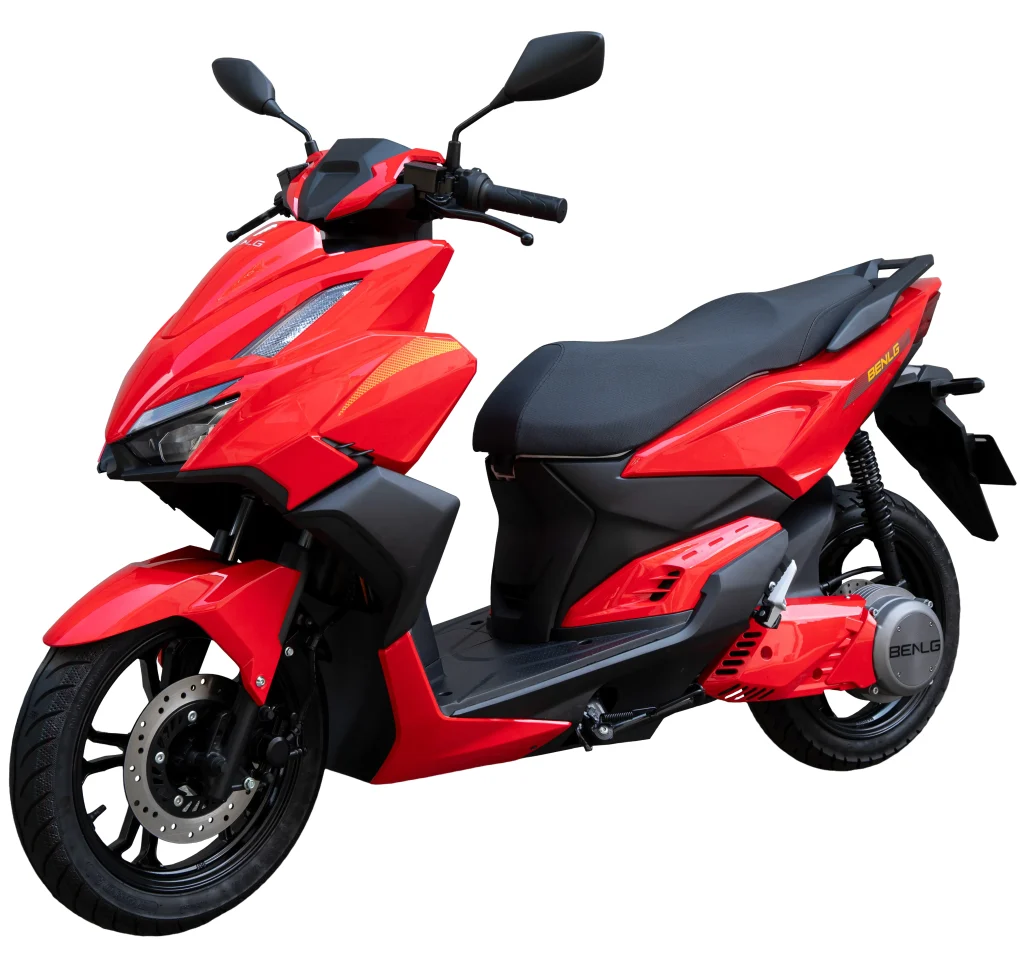
Look at the second and third rows. The three models rated at 95 km are tested at 50 km/h; the two rated at 100 km are tested at 40 km/h. On paper the 95 km model looks weaker. In practice it was put through a harder test. This is precisely the trap described in Section 2.
The fourth row adds a second variable: those models carry a 35 Ah lead-acid pack rather than a 40–45 Ah lithium one, and they still quote 100 km — because the test speed is lower and the drive system draws less. That is not a contradiction; it is a different design point aimed at a different duty cycle.
The useful question is therefore never “which number is bigger”, but “at what speed, with what load, and over what route”. A distributor comparing these four rows against a competitor’s single headline figure is comparing two different things.
Choose Range for the Intended Application
Urban commuting: Consider typical travel distances, traffic conditions, charging access, and the speed at which the scooter will normally be used.
Delivery operations: Evaluate daily mileage, payload, route gradients, stop frequency, charging opportunities, and battery replacement planning.
Passenger transport: Consider the expected number of occupants, load capacity, route conditions, and performance under the intended passenger load.
Distribution and retail: Compare battery options, the vehicle’s intended market, applicable local requirements, and the consistency of the supplier’s technical specifications. For buyers comparing different seated scooter categories, BENLG also provides a guide to moped scooters for adults, and a separate moped scooter sourcing guide covering the procurement side in more detail.
A high advertised range can be attractive, but it is only one part of a suitable product specification.
Frequently Asked Questions
1. Does a Larger Battery Always Provide a Longer Electric Scooter Range?
A larger battery generally provides more stored energy. However, actual range also depends on usable battery capacity and the scooter’s energy consumption per kilometer. A more efficient scooter may travel farther than a less efficient model with a similar battery energy rating.
2. Does Riding Faster Reduce Electric Scooter Range?
Generally, yes. Higher speeds increase aerodynamic drag, and the power required to overcome aerodynamic drag rises approximately with the cube of speed under otherwise comparable conditions. The effect on total range depends on other energy demands, motor efficiency, and the riding environment.
3. How Does Rider or Cargo Weight Affect Electric Scooter Range?
Additional weight generally increases the energy needed for acceleration and climbing. It can also increase rolling resistance. The actual effect depends on the route, speed, vehicle design, and load distribution.
4. Do Electric Scooters Lose Range in Cold Weather?
They can. Low temperatures may reduce the usable capacity and power performance of the battery. The extent of the effect depends on battery chemistry, design, temperature, and operating conditions.
5. Do Dual-Battery Electric Scooters Always Have Twice the Range?
No. A dual-battery configuration can provide more total energy, but twice the battery count does not automatically mean twice the real-world range. The result depends on total usable energy, vehicle weight, battery configuration, and energy consumption.
6. Why Can Two Electric Scooters with the Same Battery Capacity Have Different Ranges?
They may differ in motor and controller efficiency, cruising speed, aerodynamic drag, tire resistance, vehicle weight, electrical losses, and control strategy. Test conditions can also produce different reported results, even when the underlying vehicles are similar.
7. Can GPS and Anti-Theft Features Reduce Electric Scooter Range?
They can consume energy while the scooter is parked if they remain active or periodically wake up. The effect depends on the system’s power consumption, standby duration, and sleep-mode behavior. Ask the manufacturer for standby-consumption information if long parking periods are common.
8. What Should Importers Check Before Ordering a Long-Range Electric Scooter?
Importers should verify battery specifications, the conditions behind the range claim, intended payload and speed, applicable certification requirements, battery replacement options, and the availability of technical documentation. Comparing these details helps establish whether a model is suitable for the target market. For the procedural side — documentation, pre-shipment inspection, payment terms — see our guide to importing electric bikes, scooters and mopeds from China.
Conclusion
A long-range electric scooter is the result of more than a high-capacity battery. Battery energy establishes the available energy budget, while cruising speed, payload, temperature, terrain, drive-system efficiency, tires, vehicle design, and standby consumption influence how much energy is available for actual riding.
For importers and distributors, the most reliable approach is to compare scooters under similar test conditions and select models based on actual operating requirements. A realistic range assessment is more useful for product selection and customer expectations than a maximum-distance claim without supporting conditions.
Looking for electric scooters for your market? BENLG supplies electric two-wheelers and related vehicles for B2B customers. When evaluating a model for distribution or fleet use, share your target market, intended application, expected cruising speed, and approximate daily mileage so the relevant vehicle and battery specifications can be assessed.
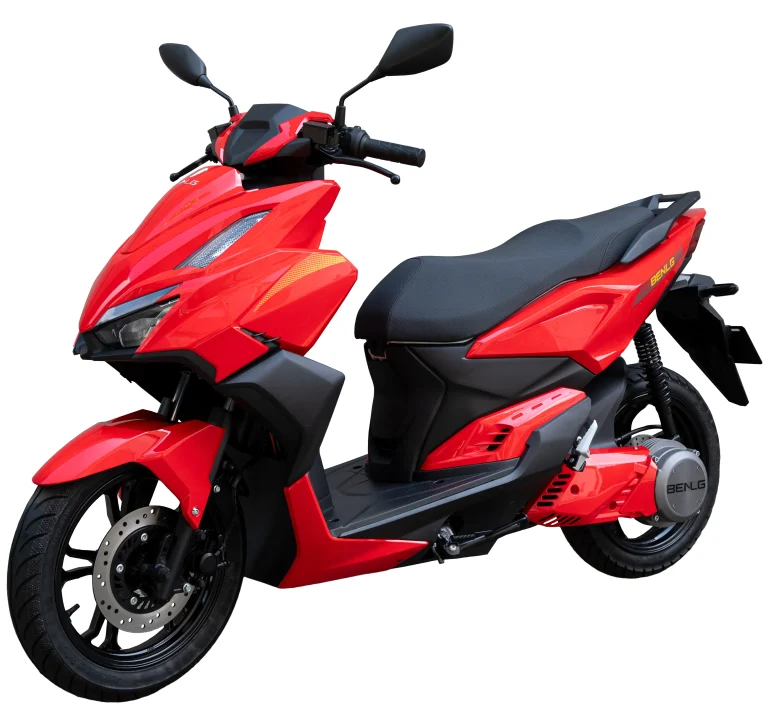
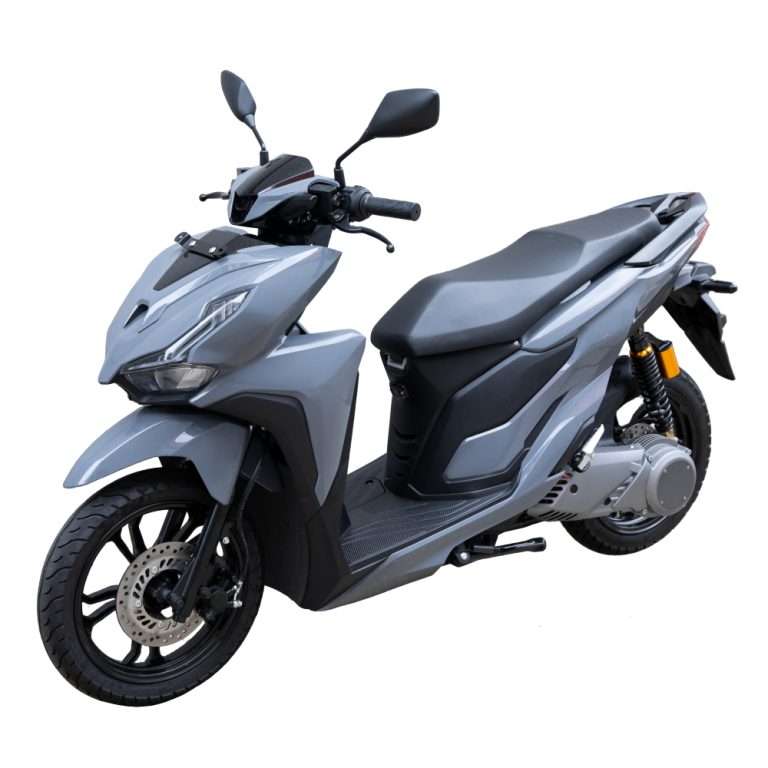
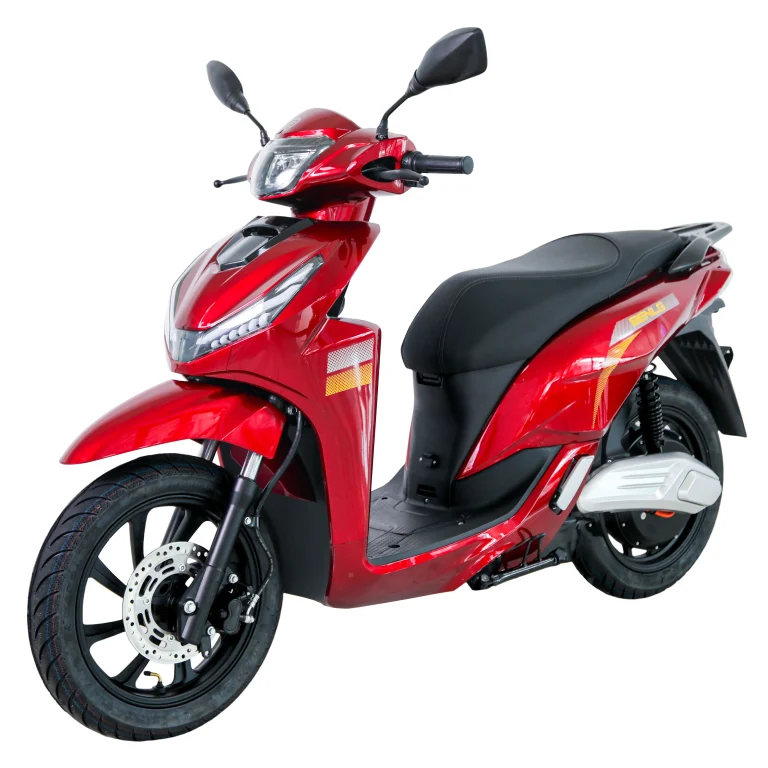
The third model carries a lower headline figure because it was tested 10 km/h faster — the comparison point set out in Section 2. Full specifications are on each product page.
📩 Contact the BENLG export team with your market, application and target daily mileage | 💬 WhatsApp answered during China business hours.