


How to Import Electric Bikes, Scooters & Mopeds from China: A Complete Dealer’s Guide
This guide equips dealers and distributors with a step‑by‑step plan for importing Chinese electric two‑wheelers — covering product reality, multi‑market compliance, shipping terms, customs, and battery logistics.
The global demand for electric two‑wheelers is expanding rapidly, driven by urban congestion, delivery services, and green policies. For dealers, sourcing directly from China offers significant margin potential — but only if you navigate the terminology, regulations, and logistics correctly. Whether you are planning on starting an electric motorcycle business or expanding your existing dealership, this guide will help you avoid costly missteps.
1. The Terminology Reality: What Does “Electric Bike” Actually Mean in China?
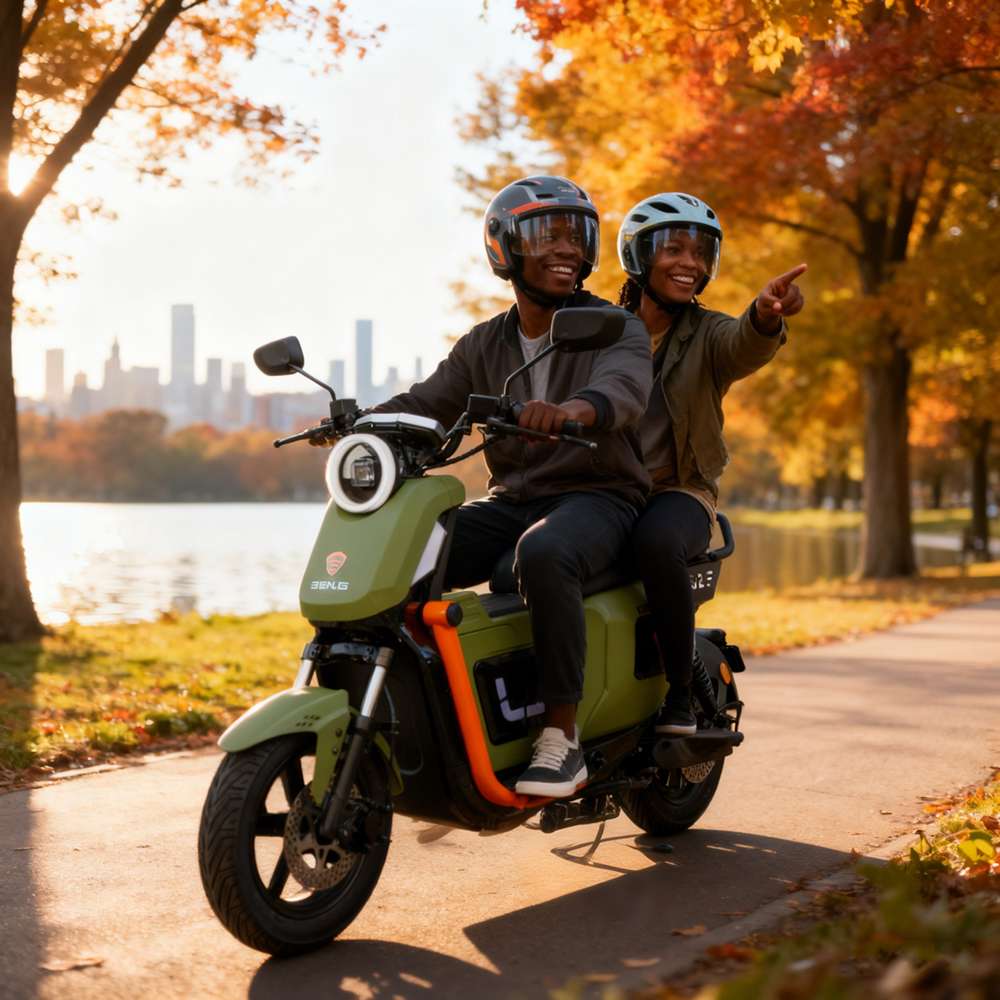 Moped‑Style “Electric Bike”
The biggest early mistake importers make is assuming that a Chinese “electric bike” is the same as a Western e‑bike. The truth is more nuanced: Chinese factories produce a wide spectrum of electric two‑wheelers, including traditional pedal‑assist bicycles (Pedelecs). However, the term “electric bike” in the domestic Chinese market most often refers to a step‑through, throttle‑operated scooter that resembles a small motorcycle — the country’s best‑selling category. When a supplier says “electric bike,” you must clarify exactly which type they mean.
Use the table below to understand the two most common product types, and always confirm specifications with your supplier before ordering.
| Feature | Moped‑Style “Electric Bike” (Common in China) | Pedal‑Assist E‑Bike / Pedelec (Common in West) |
|---|---|---|
| Appearance | Step‑through scooter frame, flat floorboard, integrated seat | Traditional bicycle frame, thin tires, bicycle saddle |
| Drive mode | Twist‑and‑go throttle; pedals often decorative or absent | Pedal‑assist only; motor helps only when pedaling |
| Typical speed | 25–50 km/h | Limited to 25 km/h (EU) or 20–28 mph (US) |
| Primary use | Urban commuting, food delivery, utility transport | Fitness, recreation, light commuting |
Key takeaway for importers: China can manufacture traditional pedal‑assist e‑bikes, but you must specifically request them and verify the design. If you simply order “electric bikes” from a typical Chinese supplier without clarification, you are very likely to receive moped‑style scooters. At BENLG, our core product lines focus on step‑through electric scooters, low‑speed electric mopeds, and pedal‑equipped electric scooters — built for utility and urban mobility. If your market strictly demands bicycle‑style pedelecs, you need to communicate that clearly or seek a supplier specialized in that category. The important thing is to know exactly what you are buying.
2. Know Your Market’s Classification Before You Buy
Classification determines licensing, road legality, certifications, and import duty rates. Never choose a product first and then check the rules — do it the other way around.
2.1 European Union – L1e Categories and Anti‑Dumping Realities
The EU groups light two‑wheeled vehicles under Regulation (EU) No 168/2013:
- L1e‑A (powered cycle): pedal‑assist, ≤25 km/h, ≤1,000 W
- L1e‑B (two‑wheel moped): ≤45 km/h, throttle allowed
- L3e (motorcycle): >45 km/h, full type approval
Most Chinese throttle scooters fall into L1e‑B and require an EEC Certificate of Conformity (CoC). Without the required type-approval documentation (such as a CoC where applicable), the vehicles generally cannot be legally registered or placed on the EU market.
Critical tariff tip: The HS code you use dramatically changes your cost.
- HS 8711.60.10 (electric bicycles with pedal assistance) can face anti‑dumping duties of up to 79.3% on Chinese imports.
- HS 8711.60.90 (electric mopeds and motorcycles) often attracts a standard third‑country duty of just 6%, completely avoiding the e‑bike anti‑dumping measures.
- In the EU Combined Nomenclature (CN), further sub-classifications may apply.
This means a correctly certified L1e‑B moped can be significantly more profitable to import than a misclassified “e‑bike”.
2.2 United States – The Three‑Class System and Federal Rules
The US market is shaped by state adoption of the three‑class e‑bike system and federal motor vehicle safety standards:
- Class 2 e‑bike: throttle‑operated, top speed ≤20 mph (32 km/h), operable pedals, motor ≤750 W. In most states this requires no license, registration, or insurance — a huge consumer advantage.
- >20 mph / no pedals: likely classified as a motor vehicle, subject to applicable FMVSS requirements and manufacturer self-certification.
Pedal‑equipped electric scooters that stay within Class 2 limits represent a very attractive import opportunity. The applicable US HTS code is typically 8711.60.00 (motorcycles with electric motor). Always check for current Section 301 tariffs on Chinese vehicles.
2.3 Other Markets – A Universal 4‑Step Compliance Check
Many countries lack a dedicated category for throttle‑operated electric scooters. They may default to “motorcycle” classification, which carries much stricter requirements. Use this process for any market not covered above:
- Search for “[country] electric vehicle classification import regulations” on the ministry of transport or customs authority website.
- Check whether the country distinguishes between “pedal‑assist bicycle” and “throttle‑operated scooter/moped”.
- Identify the exact certification or type‑approval required (CE, EEC, local homologation, or an equivalent safety mark).
- Confirm the correct HS code and applicable tariff rate — misclassification can lead to fines or shipment seizure.
Do not assume a “bicycle” classification just because the vehicle has pedals. Many customs authorities look at power, speed, and primary drive mode.
3. Electric Two‑Wheeler Categories Available from China
Understanding what Chinese factories actually produce helps you match products to your market’s legal slot.
- Step‑through electric scooters – flat floorboard, twist‑and‑go, 25–50 km/h. The most common urban and delivery vehicle. Usually needs moped or motorcycle registration.
- Low‑speed electric mopeds – similar to scooters, sometimes with vestigial pedals. 25–45 km/h. Can fit L1e‑B in the EU if properly certified.
- Pedal‑equipped electric scooters – designed to meet “bicycle” definitions where possible, especially the US Class 2 category. Verify carefully; many regulators look beyond the pedals.
- Traditional pedal‑assist e‑bikes (Pedelecs) – available from specialized Chinese factories. Ensure you specify EN 15194 compliance for the EU or relevant US standards.
- High‑speed electric motorcycles – >50 km/h, >2,000 W. Higher margins but full motorcycle certification required.
4. Finding and Verifying a Chinese Supplier
Once you know which category fits your market, supplier due diligence is non‑negotiable. For a complete walkthrough, read our dedicated sourcing guide: Electric Tricycle and Electric Motorcycle Manufacturers in China: A Complete Sourcing Guide for Importers. Here are the essential checkpoints:
- Export track record: ask for shipment records from the past 12–24 months and references from your target region.
- Certification capability – the most critical filter: directly ask: “Can you provide an EEC Certificate of Conformity for L1e‑B?” or “Have you exported certified units to [your country] before?”.
- Sample order: always test samples with full documentation before committing to a container load.
5. Shipping Terms, Customs Clearance, and Battery Logistics
5.1 Understanding Shipping Terms (Incoterms) — The Cost Allocation Blueprint
Your supplier will quote prices using standard Incoterms. The three most common are:
| Term | What It Means | Who Handles What |
|---|---|---|
| EXW (Ex Works) | Buyer collects goods from the factory. | Buyer handles everything from the factory gate onward — inland transport, export clearance, freight, insurance, import clearance, and delivery. |
| FOB (Free on Board) | Supplier delivers goods to the port and loads them onto the vessel. | Supplier covers inland transport to the port and export clearance. Buyer handles ocean freight, insurance, destination clearance, and inland delivery. |
| CIF (Cost, Insurance, Freight) | Supplier pays for shipping and insurance to the destination port. | Supplier covers freight and insurance to the destination port. Buyer handles import clearance and inland delivery from the port. |
Most Chinese manufacturers quote FOB. Under FOB, the detailed division of labor is as follows:
- The Supplier’s Responsibility (e.g., BENLG): manufacturing, local transportation to the Chinese departure port, China export customs declaration, and loading the container onto the vessel.
- The Importer’s (Your) Responsibility: hiring a freight forwarder to book ocean freight, purchasing marine insurance, handling customs clearance at the destination port, paying all import duties and VAT, and arranging last‑mile delivery to your warehouse.If you do not already have a freight forwarder, ask your supplier — they often work with reliable forwarders and can make an introduction. You will pay the forwarder directly, but the recommendation can save you time and give you peace of mind.
Understanding payment terms is a critical part of any international bulk electric motorcycle transaction. If you want to learn more about how to structure your payments securely — including detailed breakdowns of T/T (Telegraphic Transfer) and L/C (Letter of Credit), as well as practical risk management strategies for B2B imports — we highly recommend reading our in-depth guide: Bulk Electric Motorcycle Import: Secure B2B Payment Guide (T/T, L/C & Risk Management). This resource walks you through common payment structures, banking regulations in emerging markets, and how to protect your transaction from costly discrepancies.
Shipping electric motorcycles in bulk involves more than just booking a container — packaging methods and battery compliance play a huge role in your final landed cost and customs clearance. To dive deeper into the differences between CBU, SKD, and CKD packaging, as well as the latest 2026 battery shipping regulations (including the UN3556 update), check out our complete shipping guide: Bulk Electric Motorcycle Shipping Guide: CBU vs SKD vs CKD Packaging & Battery Compliance. It covers everything from container utilization to tariff incentives and dangerous goods declarations, so you can ship without costly surprises.
5.2 Step‑by‑Step Customs Clearance and Cargo Receiving
To clear customs, you will typically need:
- Commercial invoice – value and description of goods
- Packing list – weight, dimensions, and contents of each package
- Bill of lading – shipping document from the carrier
- Certificate of origin – may qualify for preferential tariff treatment
- Certification documents – EEC, DOT, or other required approvals
HS Code: Electric two-wheelers are typically classified under HS Code 8711.60.00 (motorcycles fitted with electric motors for propulsion). This is the code you will use for customs declaration. Tariff rates vary by country and by vehicle classification — check your local customs authority for exact rates.
Important: If your products are misclassified, you may face delays, penalties, or even seizure. Work with a licensed customs broker in your country.

When your container arrives at the port:
- Your freight forwarder or customs broker will handle customs clearance
- You (or your broker) will pay import duties and VAT
- Once cleared, you arrange inland transport from the port to your warehouse
Common problems to avoid:
- Missing or incorrect documentation – delays clearance
- Unpaid duties or incorrect tariff classification – results in penalties
- Certification not recognized – goods may be held or destroyed
Here is the exact workflow:
- Hire a licensed customs broker at least two weeks before the vessel departs. Your freight forwarder can usually provide one.
- Confirm HS code and duty rate. As discussed in Section 2, the correct code can mean the difference between 79.3% anti‑dumping duty and 6% standard duty.
- Prepare mandatory documents that the supplier sends after departure: Bill of Lading, Commercial Invoice, Packing List, Certificate of Origin, and all certifications (CoC, EEC, CE, etc.).
- Pay duties and taxes. Your broker will submit the entry declaration. You will need to cover customs duties, VAT/GST, and terminal handling charges.
- Arrange drayage (port‑to‑warehouse trucking). After customs release, a trucking company moves the container to your warehouse. Trucking companies often include only a limited free unloading time (commonly around two hours) before detention or waiting charges apply.
5.3 Battery Logistics – The Hidden Cost Driver
Electric two‑wheelers run on lithium‑ion batteries, which are Class 9 Dangerous Goods. Get this wrong and your shipment may be delayed or refused.
- Preferred: UN 3171 (battery‑powered vehicle). Ship with batteries installed or packed inside the vehicle. This avoids standalone dangerous goods surcharges and simplifies clearance.
- Avoid: UN 3480 (loose lithium‑ion batteries). Shipping batteries separately triggers expensive packaging requirements, heavy carrier surcharges, and much stricter inspections.
- Budget alternative: UN 2800 (lead‑acid). Vehicles equipped with lead‑acid batteries are significantly cheaper to ship and do not incur Class 9 dangerous goods surcharges.

 UN3171 vs. UN3480: The Battery Shipping Dilemma
6. Final Pre‑Order Checklist
- ☐ I have clarified with the supplier exactly what “electric bike” means in our transaction.
- ☐ I have identified my target country’s vehicle classification (EU L1e, US Class, or other).
- ☐ I know the exact HS code and tariff rate for my product.
- ☐ My supplier can provide the required CoC / EEC / DOT paperwork.
- ☐ I have tested a sample unit with full documentation.
- ☐ I have verified the supplier’s export history to my region.
- ☐ I understand the Incoterms (EXW, FOB, CIF) and have budgeted for freight, insurance, and duties.
- ☐ I have confirmed the battery shipping method (UN 3171 preferred).
- ☐ I have a licensed customs broker ready at the destination port.
7. Conclusion
Importing electric two‑wheelers from China is a repeatable, profitable process when you follow the right sequence: clarify product terminology, nail the market classification and HS code, lock down certifications, understand shipping terms, and execute a clean customs clearance with proper battery logistics.
BENLG has been manufacturing electric two‑wheelers for over 20 years, exporting to more than 65 countries. We specialize in step‑through electric scooters, low‑speed mopeds, and pedal‑equipped models built for urban utility. We provide compliant vehicles, full export documentation, and the logistics support you need to launch or scale your dealership.
👉 Ready to start? Contact BENLG today for a market‑specific consultation and sample options.
BENLG – Electric mobility, built for your market.


