Electric Motorcycle Market in Rwanda: Opportunities for Dealers and Distributors
A complete guide to Rwanda’s policies, market players, import requirements, and financial benchmarks – for dealers and distributors looking to enter one of Africa’s fastest-growing e-mobility markets.
📌 This is a country-specific guide. For a general step-by-step framework on starting an electric motorcycle business in any market, read our complete startup guide.
1. Market Overview: Why Rwanda?
Rwanda has positioned itself as one of Africa’s most progressive e-mobility markets. With a clear policy framework, active government support, and rapidly growing infrastructure, the country is becoming a real-world laboratory for electric motorcycle adoption.
Key market indicators:
- Spiro alone operates more than 25,000 electric motorcycles in Rwanda.
- Supported by nearly 350 battery-swapping stations nationwide
- Spiro alone operates across seven African countries, with manufacturing facilities in Kenya, Rwanda, and Uganda
- Government target: 30% of all motorcycles electric by 2030
For dealers and distributors, this means a market that is not just promising – it is already active and growing.
2. Government Policies and Incentives
2.1 Fuel Motorcycle Ban (Enforced)
Since January 2025, the government has banned the registration of new internal combustion engine (ICE) motorcycles for public transport in the City of Kigali. Only electric motorcycles are now permitted for new public transport registrations in the capital. This is not a proposal – it is active policy.
2.2 Import Duty and VAT Exemptions
Electric vehicles, including electric motorcycles, continue to benefit from full import duty and VAT exemptions until June 30, 2028. This applies to:
- Fully built electric motorcycles
- Relevant batteries and battery packs
- Charging equipment
According to the Rwanda Revenue Authority (RRA), the government extended incentives on electric vehicles and electric motorcycles to pay an import duty rate of zero, intending to accelerate the transition to electric vehicles and reduce greenhouse gas emissions.
For electric vehicles valued at or below US$60,000, the EAC Common External Tariff is reduced to 25%; vehicles above US$60,000 are fully exempt.
Official sources:
- Rwanda Revenue Authority (RRA) – www.rra.gov.rw
- Ministry of Finance and Economic Planning (MINECOFIN) – www.minecofin.gov.rw
2.3 Additional Incentives
- Free dealer license fees: Application and authorization fees for electric motorcycle dealer licenses are free (compared to 10,000 RWF for petrol motorcycles)
- Reduced vehicle registration fees: Electric motorcycles pay Frw 75,000 for registration
- Government procurement: Public procurement must include at least 30% electric vehicles
- Financing support: A rebate scheme aims to distribute 1,150 rebates by 2026 and 9,000 by 2030, with at least 10% allocated to women
Official sources:
- Rwanda Utilities Regulatory Authority (RURA) Licensing Portal – licensing.rura.rw
3. Product Certification – RSB Standards
Electric motorcycles sold in Rwanda must meet technical standards set by the Rwanda Standards Board (RSB).
Key standard: RS ISO 18243:2017 – “Electrically propelled mopeds and motorcycles — Test specifications and safety requirements for lithium-ion battery systems”
This standard specifies the test procedures for lithium-ion battery packs and systems used in electrically propelled mopeds and motorcycles.
What this means for importers:
- Your electric motorcycle’s battery system must comply with ISO 18243 testing requirements
- Ensure your Chinese supplier can provide documentation proving compliance
- RSB may conduct random spot checks on imported vehicles
Official sources:
- Rwanda Standards Board (RSB) – www.rsb.gov.rw
- RSB Standards Store – portal.rsb.gov.rw
4. Competitive Landscape – Who Is Already in the Market?
Several players are already active in Rwanda’s electric motorcycle space. Understanding the competitive landscape helps you identify gaps and opportunities.
Spiro
Spiro is the largest player, with more than 25,000 electric motorcycles and nearly 350 battery-swapping stations in Rwanda. The company operates across seven African countries with over 100,000 electric motorcycles and 2,500 swap stations. Spiro’s strategy focuses on combining electric motorcycles with battery infrastructure – creating an ecosystem rather than only selling vehicles.
Ampersand
Ampersand is a Kigali-based manufacturer of electric motorcycles and batteries, founded in 2014. The company has more than $25M in cumulative funding. According to Ampersand, its electric motorbikes outsell competitors by a ratio of 9-to-1 in Kigali. Ampersand has also opened its network of roughly 70 charging and battery-swap stations to drivers of motorcycles from competing manufacturers – a strategic shift in the market.
Rwanda Electric Mobility
Rwanda Electric Mobility, in partnership with the University of Rwanda, has retrofitted about 120 fuel motorcycles to electric. Retrofitting costs approximately Rwf 800,000 per motorcycle and includes battery reuse and emissions monitoring.
Market Gap for New Dealers
While Spiro dominates the swap-network space and Ampersand leads in manufacturing and sales, many areas still lack dedicated e-motorcycle dealerships offering full sales, service, and spare parts. A new dealer could differentiate by providing:
- Faster service turnaround (many existing e-motorcycle owners complain about long repair wait times)
- Customized fleet solutions for delivery companies and moto-taxi operators
- Direct consumer education and test-ride programs
- A wider range of motorcycle models beyond what single manufacturers offer
5. Import and Licensing Requirements
5.1 Import – Zero Tariff
As noted above, electric motorcycles, parts, batteries, and charging equipment are fully exempt from import duty and VAT until June 30, 2028. Use the correct tariff codes – confirm with Rwanda Revenue Authority (RRA) customs before shipping.
5.2 Licensing – Step by Step
Step 1: Company Registration – Rwanda Development Board (RDB)
- Register your company online through the RDB portal
- Cost: approximately US$100
- Processing time: 2-3 working days
- Required: passport copy, proposed company name, business activity description
Step 2: Tax Identification Number (TIN) – Rwanda Revenue Authority (RRA)
- Usually issued automatically after company registration
- If not, apply online via RRA e-services
- Free of charge
Step 3: Dealer License – Rwanda Utilities Regulatory Authority (RURA)
- Apply through the RURA licensing portal (licensing.rura.rw)
- Application and authorization fees for electric motorcycles are free (compared to 10,000 RWF for petrol motorcycles)
- Required: proof of business registration, tax ID, physical shop address
- Processing: 5-10 working days
Step 4: Import Clearance
- Work with a licensed clearing agent in Kigali or at the port of entry (most e-motorcycles enter via Mombasa, then truck to Kigali)
- Use zero-duty tariff codes – confirm with RRA customs before shipping
Step 5: Vehicle Registration (for sold units)
- Each motorcycle sold must be registered with Rwanda National Police (RNP) / RRA
- Registration fees for electric motorcycles: Frw 75,000
- You can help your customers with registration as a value-added service
Official sources:
- Rwanda Development Board (RDB) – www.rdb.rw
- Rwanda Revenue Authority (RRA) – www.rra.gov.rw
- Rwanda Utilities Regulatory Authority (RURA) Licensing – licensing.rura.rw
6. Financial Benchmarks – What Does It Cost to Start?
These figures are based on real market conditions in Rwanda as of 2026.
6.1 Estimated Startup Costs (USD)
| Item | Estimated Cost (USD) |
|---|---|
| Company registration (RDB) | ~100 |
| Dealer license (RURA) – electric motorcycles | Free |
| First container of e-motorcycles (20-30 units, FOB price) | 12,000 – 18,000 |
| Shipping and insurance (China to Mombasa) | 3,000 – 5,000 |
| Clearing and port handling (Mombasa – Kigali transport) | 3,000 – 5,000 |
| Rent deposit + first 3 months (60-80 m² shop in Kigali) | 3,000 – 5,000 |
| Basic renovation, signage, display shelves | 3,000 – 5,000 |
| Working capital reserve (6 months) | 7,000 – 10,000 |
| Total estimated | ~34,000 – 53,000 |
Note: FOB price per unit is approximately US$600-800. With shipping and insurance, landed cost (CIF) is approximately US$900-1,100 per unit. Import duty is zero.
6.2 Monthly Fixed Costs (Kigali)
- Rent: US$500-800 per month (60-80 m², mid-range area)
- Staff: US$400-600 (1 salesperson + 1 technician + 1 helper)
- Utilities & internet: US$100-150
- Marketing: US$100-200
- Spare parts inventory: US$200-300
- Total monthly fixed costs: approximately US$1,300-2,000
6.3 Gross Profit Per Unit
- Landed cost (CIF – China to Rwanda): US$900-1,100 per unit (including shipping, insurance, zero duty)
- Retail price in Rwanda: US$1,200-1,800 (depending on model and specifications)
- Variable expenses: US$50-80 (local transport, registration fee, pre-delivery inspection)
- Gross profit per unit: approximately US$400-800 (conservative estimate: US$500)
6.4 Breakeven and Payback Example
Breakeven: With fixed costs US$1,500 and gross profit US$500 → Breakeven = 3 units/month. Selling just 3-4 bikes per month covers all costs.
Payback: Sell 8 units/month → Net profit = (8×500)−1,500 = US$2,500. Initial investment US$40,000 → payback in approximately 16 months.
Pessimistic scenario: Even with 40% lower sales, a Rwanda dealer can survive because fixed costs are low and gross margins are healthy.
7. How to Choose Your Location in Kigali
Location is the single most important factor for walk-in traffic and sales volume. Here is a practical method for evaluating potential locations.
7.1 Traffic Count – The Most Direct Indicator
Spend one day at each potential location and count:
- Motorcycles passing per hour – especially during morning (7-9 AM), midday (12-2 PM), and evening (5-7 PM) peaks
- Boda boda waiting/parking areas – the more riders waiting, the more potential customers
- Delivery vans and trucks – indicates commercial/logistics activity
If a location has fewer than 50 motorcycles passing per hour during peak times, it may not generate enough foot traffic.
7.2 Competitor Mapping
Visit every motorcycle-related shop within a 1 km radius:
- Fuel motorcycle dealerships – record their brands, store size, and customer traffic
- Existing e-motorcycle shops – if any, observe their volume and service quality
- Repair shops and spare parts stores – they may also sell bikes informally
Key question: Is the area saturated with competitors? If there are already 5+ motorcycle shops within 500 meters, the market may be crowded.
7.3 Estimate Nearby Sales Volume
Talk to nearby shop owners (not direct competitors, e.g., convenience stores, phone shops) and ask:
- “How many motorcycle riders come here daily?”
- “Do you see many new motorcycles being purchased around here?”
Visit the nearest fuel station and observe how many motorcycles refuel – this gives you a rough idea of how many active riders are in the area.
7.4 Recommended Areas in Kigali
Based on the above criteria, these areas have strong potential:
- Kimironko: Dense residential and commercial area with high boda boda activity, relatively few established dealerships
- Remera: Near Amahoro Stadium – high traffic, many taxi and delivery riders
- Downtown Kigali (CBD): Highest foot traffic, excellent brand visibility, but higher rent
- Nyabugogo: Main bus terminal and transport hub – thousands of motorcycles pass daily
- Airport road corridor (Kacyiru to Kanombe): Growing commercial area with many fleet operators
Secondary cities with less competition: Musanze (tourist gateway), Rubavu/Gisenyi (lake trade route), and Huye (university town).
8. Branding and Business Model – Choose Your Path
When entering the Rwandan market, you have two primary options:
Option 1: Brand Agency / Distribution
Sell electric motorcycles under an existing brand’s name (e.g., BENLG as an authorized distributor).
Advantages: Faster market entry, leveraging existing brand recognition, manufacturer marketing support
Disadvantages: Lower margins, less control over branding, dependent on manufacturer’s reputation
Option 2: Private Label / Own Brand
Work with a Chinese manufacturer (like BENLG) to produce electric motorcycles with your own brand name, colors, and specifications.
Advantages: Higher margins, full brand ownership, product differentiation, long-term brand value
Disadvantages: Higher upfront investment, requires marketing effort to build brand awareness
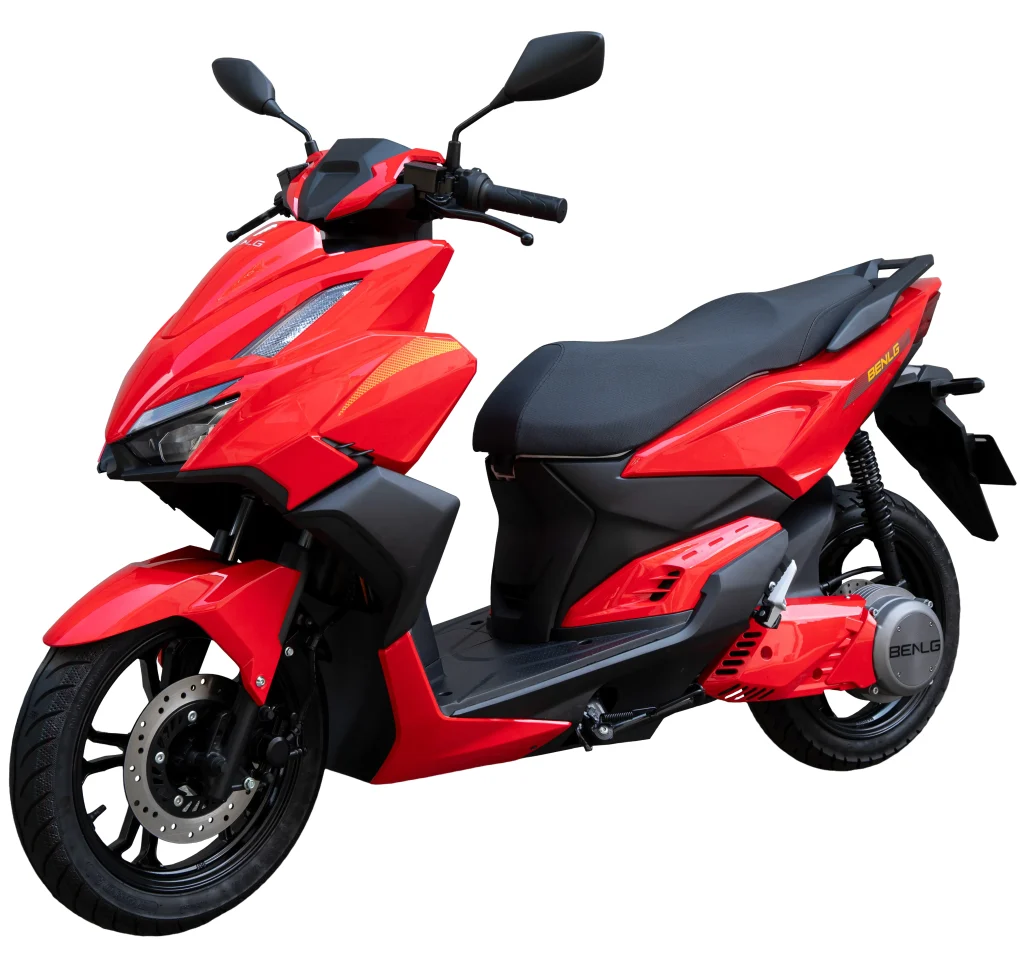
BENLG supports both options. We supply finished electric motorcycles under the BENLG brand for authorized distributors, OR we manufacture custom-branded (OEM/private label) electric motorcycles under your brand name. We also offer complete CKD kits for local assembly – which reduces import duties and can satisfy local content requirements.
9. Customer Acquisition – B2B First, B2C Follows
B2B Strategy (Volume Sales)
Target customers:
- Moto-taxi cooperatives – Kigali has dozens of registered motorcycle transport cooperatives. Offer them group test rides and cooperative discounts.
- Delivery companies – logistics and last-mile delivery operators expanding their fleets
- Fleet operators looking to replace fuel motorcycles with electric alternatives
How to approach them:
- Identify the top 10 moto-taxi cooperatives in Kigali (ask at RURA or local transport offices for a list)
- Visit their offices directly – don’t wait for them to find you
- Offer a “fleet trial” – lease 5-10 motorcycles to a cooperative for one month at a reduced rate
- Show them the math: “Save US$4-5 per day on fuel – that’s US$120-150 per month per motorcycle”
Financing partnerships: Partner with SACCOs (savings and credit cooperatives) to offer financing to your B2B customers. Many Rwandan riders access loans through SACCOs – if you can get your electric motorcycles approved for SACCO financing, you remove the upfront cost barrier.
B2C Strategy (Retail Sales)
Marketing tactics:
- Test ride events – set up at busy gas stations on weekends. Riders are already there filling up – show them what they are missing
- Social media in Kinyarwanda – posts in the local language get significantly higher engagement
- Referral program – existing customers who refer a buyer get free maintenance or a discount
- WhatsApp groups – create owner communities, share daily tips and success stories
Key message: “Save US$4-5 per day on fuel – that’s US$120-150 per month. Your electric motorcycle pays for itself.”
10. After-Sales Service – Your Competitive Moat
Many existing e-motorcycle owners in Rwanda complain about long repair wait times. A dealer who offers rapid service (24-48 hour turnaround) will capture market share immediately.
Key actions:
- Keep 3 months’ inventory of common parts (brake pads, tires, fuses, lights, controllers)
- Train at least one technician on battery, motor, and controller diagnosis (BENLG provides remote training and documentation)
- Partner with existing local motorcycle repair shops to create a network of satellite service points
11. Summary: Why Rwanda?
Rwanda offers a unique combination of factors that make it one of the most accessible and promising electric motorcycle markets in Africa:
- Clear, enforced policy – the fuel motorcycle ban is real and active
- Zero import duty and VAT on electric motorcycles through 2028
- Free dealer licensing for electric motorcycles
- Active infrastructure growth – 350+ swap stations and expanding
- Competitive but not saturated – clear gaps in full-service dealerships
- Reasonable startup costs – US$34,000-53,000 entry point
- Healthy margins – 40-60% gross profit per unit
For dealers and distributors looking to enter the African e-mobility market, Rwanda is a compelling entry point.
👉 Ready to start? Contact BENLG for electric motorcycle supply, OEM/private label options, and CKD kits tailored to the Rwandan market.
BENLG – Electric mobility, built for Africa.
Ready to Start Your Electric Motorcycle Dealership?
BENLG offers flexible supply options for dealers and distributors worldwide – from finished vehicles and CKD kits to OEM/private label branding. Whether you are launching a new dealership or expanding your existing lineup, we have a solution for your market.