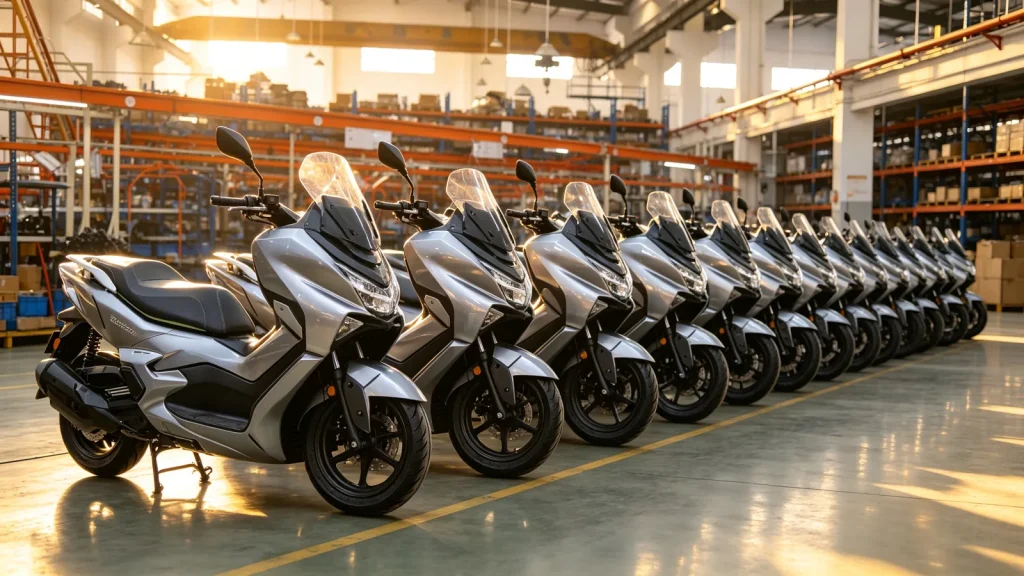
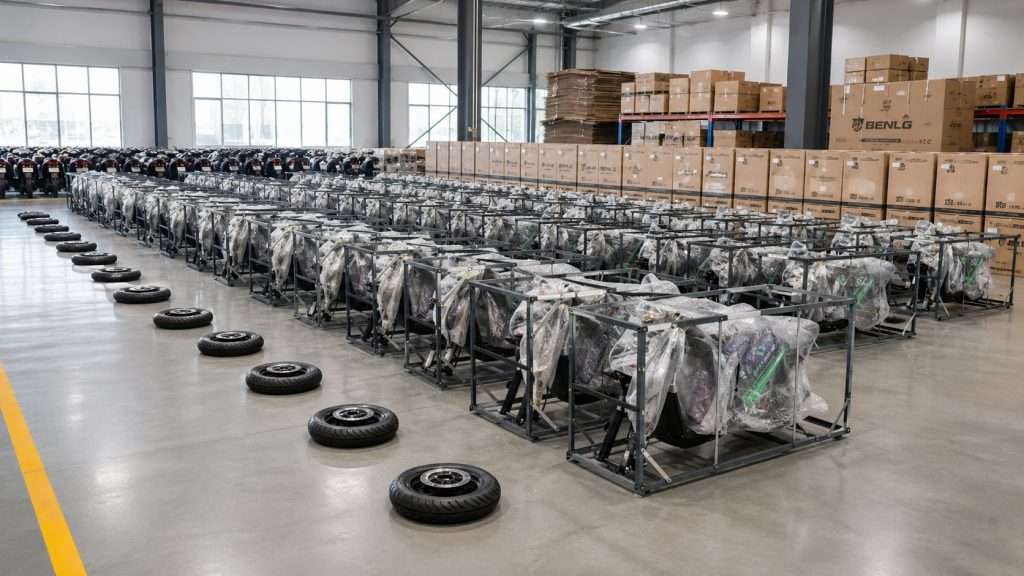
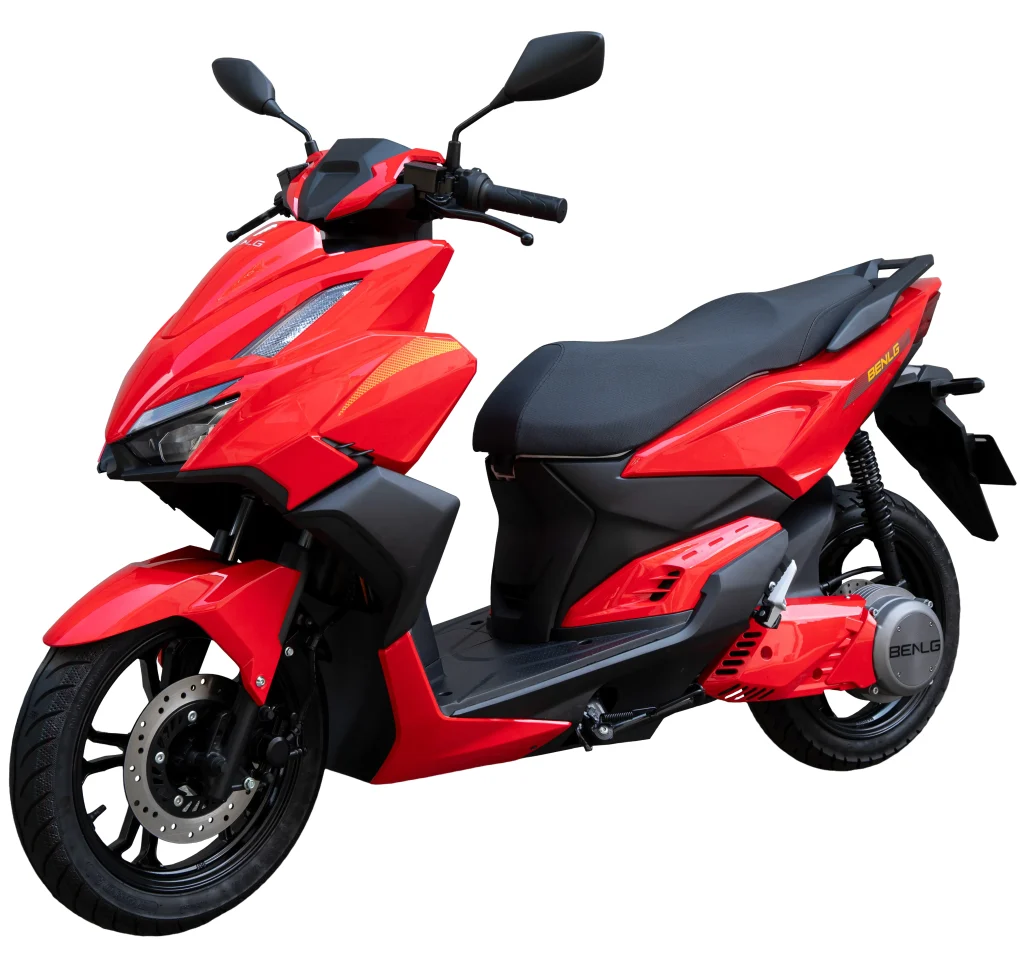
Passenger transport is one of the vehicle segments where electrification can make a meaningful difference to fleet operating costs, especially when vehicles are used intensively every day. Electric motorcycles, scooters, mopeds and tuk-tuks can serve very different passenger transport applications, but choosing the right vehicle requires more than comparing motor power or battery capacity.
For fleet operators, the real question is not simply whether an electric vehicle can replace a gasoline-powered vehicle. The more useful question is whether the entire operating model can work with electric vehicles: the routes, daily mileage, passenger loads, charging or battery-swapping process, maintenance requirements and total cost of ownership.
This guide explains how to evaluate passenger fleet electrification and how to choose between electric motorcycles, scooters, mopeds and tuk-tuks for different commercial transport applications.
1. What Is Passenger Fleet Electrification?
Passenger fleet electrification is the process of replacing conventional gasoline- or diesel-powered passenger vehicles with electric vehicles across a commercial or organizational fleet.
Unlike buying an electric vehicle for personal use, fleet electrification involves multiple vehicles operating according to a defined business model. A passenger fleet may include motorcycle taxis, urban passenger scooters, tuk-tuks, local shuttle vehicles or other vehicles used for paid or organized passenger transportation.
A successful electrification project therefore involves more than purchasing electric vehicles. Fleet operators typically need to consider:
- Vehicle selection and passenger capacity
- Daily mileage and route conditions
- Battery capacity and range requirements
- Charging or battery-swapping infrastructure
- Vehicle utilization and operating schedules
- Maintenance and spare parts
- Total cost of ownership
- Local vehicle, licensing and passenger-carrying regulations
The most suitable electric fleet is not necessarily the one with the largest battery or most powerful motor. It is the one whose vehicle, energy system and operating model match the actual requirements of the fleet.
2. Why Are Passenger Transport Fleets Switching to Electric Vehicles?
Lower Energy Costs Can Improve Fleet Economics
Commercial vehicles are used much more intensively than most privately owned vehicles. A motorcycle taxi or passenger shuttle may operate for many hours each day, making energy costs an important part of the business model.In Africa alone, close to 30 million motorcycles are deployed in the motorcycle taxi industry, with nearly 99% still powered by internal combustion engines. A motorcycle taxi or passenger shuttle may operate for many hours each day, making energy costs an important part of the business model.
Electric vehicles generally convert electrical energy into motion more efficiently than internal-combustion vehicles convert fuel into mechanical power. This can create an opportunity to reduce energy costs, but the actual savings depend on local gasoline and electricity prices, vehicle efficiency, charging losses, battery usage and operating conditions.
For fleet operators, the important metric is therefore not simply the price of the vehicle. It is the total operating cost over the vehicle’s useful life.
Less Routine Powertrain Maintenance
Battery-electric vehicles do not require many of the routine engine-related services associated with gasoline motorcycles and three-wheelers, such as engine oil changes or maintenance of exhaust systems.
However, electric vehicles are not maintenance-free. Tires, brakes, suspension components, steering components, bearings and other mechanical parts still require inspection and replacement. Batteries, controllers, charging equipment and electrical connections also need appropriate maintenance.
For a commercial fleet, the objective is not to eliminate maintenance but to make maintenance more predictable and reduce unnecessary downtime.
High Vehicle Utilization Can Make Electrification More Attractive
The economics of an electric fleet depend heavily on utilization. A vehicle that travels only a few kilometers per day may not generate enough operating-cost savings to justify a higher initial investment.
By contrast, a vehicle that operates continuously on predictable urban routes can make much more effective use of its battery and charging infrastructure.
This is why commercial fleet electrification should always be evaluated using actual operating data rather than consumer-oriented specifications alone.
3. Which Passenger Transport Fleets Can Be Electrified?
Motorcycle Taxi and Boda-Boda Fleets

Motorcycle taxis are particularly interesting for electric fleet deployment because they typically operate within defined urban or regional service areas and can accumulate substantial daily mileage.
In East African markets, boda-boda services play an important role in local passenger mobility. Kenya, one of the region’s key markets, saw electric motorcycles reach 15.3% of all new motorcycle registrations in 2025——up from just 3.6% in 2023——demonstrating the accelerating pace of adoption in commercial transport fleets.Neighboring Uganda has also emerged as a significant market, with electric motorcycle sales exceeding 30,000 units in 2025, accounting for approximately 43% of Africa’s total electric motorcycle sales. For operators managing multiple motorcycles, electrification can be approached as a fleet project rather than as individual vehicle purchases.
Electric motorcycles for motorcycle taxi fleets should be evaluated for:
- Passenger and rider comfort
- Payload capacity
- Daily range
- Hill-climbing performance
- Battery charging or swapping requirements
- Durability under frequent use
- Availability of replacement parts
The vehicle should also feel familiar to riders. A motorcycle fleet that requires riders to significantly change their operating habits may face a different adoption challenge from a fleet that preserves a familiar motorcycle layout.
Urban Passenger Scooters

Electric scooters can be suitable for passenger operations where the vehicle is primarily used for urban transportation and the seating layout is designed for two-person operation.
Important considerations include seat length and width, passenger footrests, handholds, suspension, braking performance and total payload capacity.
A scooter that appears comfortable when stationary may not necessarily remain comfortable when carrying a passenger over uneven roads. Fleet buyers should therefore consider the complete passenger ergonomics of the vehicle rather than judging passenger suitability from the presence of a long seat alone.
Electric Mopeds for Passenger Applications
Mopeds can also be considered for selected passenger transport applications, but the term “moped” by itself does not determine whether a vehicle is suitable or legally approved for carrying a passenger.
Passenger-carrying capability depends on the specific vehicle design, seating configuration, passenger equipment, rated capacity and the regulations of the target market.
Before ordering mopeds for a passenger fleet, buyers should confirm that the exact configuration is approved for two-person operation where required and that the vehicle includes the necessary passenger seating, footrests and other equipment.
This distinction is particularly important for international B2B sourcing, because a vehicle specification that is acceptable in one market may not automatically satisfy another market’s requirements.
Electric Tuk-Tuks and Passenger Three-Wheelers

Electric tuk-tuks provide a different approach to passenger fleet electrification. Instead of replacing a conventional motorcycle with an electric motorcycle, operators can choose a three-wheeled vehicle when passenger capacity, stability or weather protection are more important.
Passenger tuk-tuks can be suitable for applications such as:
- Urban passenger transport
- Short-distance taxi services
- Community transportation
- Resort and tourism transportation
- Campus and industrial-park shuttle services
- Other fixed or semi-fixed local routes
The right choice depends on passenger demand, road conditions, route length and the local operating environment.
4. Choosing the Right Electric Vehicle for a Passenger Fleet
There is no single electric vehicle that is ideal for every passenger fleet. A vehicle designed for motorcycle taxi operations has very different priorities from a vehicle designed to carry several passengers at once.
| Passenger Transport Application | Potential Vehicle Type | Key Selection Priorities |
|---|---|---|
| Motorcycle taxi / boda-boda | Electric motorcycle | Maneuverability, payload, range, durability, rider familiarity |
| Urban two-person transport | Electric scooter or suitable moped | Passenger ergonomics, payload, suspension, braking, regulatory compliance |
| Higher-capacity passenger transport | Electric tuk-tuk | Passenger capacity, stability, payload, weather protection, route suitability |
| Short-distance local shuttle | Electric tuk-tuk or scooter | Route length, passenger demand, operating hours, charging access |
Electric Motorcycles for Motorcycle Taxi Operations
An electric motorcycle is often the most direct replacement for a conventional motorcycle taxi. It maintains the basic riding format that operators and riders already understand while replacing the internal-combustion powertrain with an electric system.
This type of vehicle can be particularly attractive when routes are narrow, traffic is heavy or maneuverability is important.
For fleet procurement, however, motor power alone should not be used to determine suitability. Rated payload, battery capacity, real-world range, braking, suspension, frame durability and hill-climbing ability should all be considered together.
Electric Scooters and Mopeds for Urban Passenger Transport
Scooters can offer a different passenger experience from traditional motorcycle-style vehicles. A wide floorboard, comfortable seat and upright riding position may make them attractive for urban applications.
However, fleet operators should distinguish between a vehicle that has enough physical space for a passenger and a vehicle that has been designed, rated and approved for passenger use.
Passenger equipment and legal requirements should therefore be confirmed before a fleet purchase.
Electric Tuk-Tuks for Higher-Capacity Passenger Transport
When the primary requirement is to move several passengers rather than a single passenger, a tuk-tuk can offer a fundamentally different fleet solution.
The decision should be based on actual passenger demand and route requirements. A three-wheeler may provide more passenger capacity and greater weather protection, but it may also require more road space and have different charging, maintenance and operating requirements from a two-wheeler.
Passenger Fleet Electrification
Vehicle Selection Decision Tree
- Average passengers per trip
(excluding the rider)- 1 passenger
- Two-wheeler branchSelect based on operating conditions
- What are your typical operating conditions?
- Urban / paved roads / passenger comfort→ Electric Scooter
- Mixed / rough roads / high daily utilization→ Traditional Electric Motorcycle
- 2 or more passengers
- Three-wheeler branchSelect type of tricycle
- What type of passenger tricycle fits your operating environment?
- Covered Electric Tuk-TukHot, sunny, or rainy regions Need for weather protection Urban short-distance passenger transport Emphasis on passenger comfort Similar to traditional tuk-tuk / auto-rickshaw operations
- Open Passenger Electric TricycleDrier climates Short-distance passenger transport Cost-sensitive operators Simple structure, easy maintenance Similar to open passenger tricycles in markets like Cuba
Final Verification Layer
Before finalizing any vehicle choice, confirm all of the following:
• In markets where step-through scooters already dominate urban passenger transport, high daily utilization may still be served by electric scooters. Always confirm local rider preference and regulatory requirements.
• For multi-passenger transport, the choice between covered and open tricycles depends heavily on climate, fare expectations, road conditions, and local vehicle traditions.
5. Key Specifications to Evaluate Before Electrifying a Passenger Fleet
Passenger Capacity and Payload
Passenger capacity should never be considered separately from payload.
A fleet vehicle may technically have enough seats for a rider and passenger, but the combined weight of the rider, passenger, luggage and accessories must remain within the vehicle’s rated limits.
For commercial passenger operations, buyers should look at the manufacturer’s rated payload and, where available, the vehicle’s gross vehicle weight rating rather than relying on the physical size of the seat.
Real-World Range and Daily Mileage
Advertised range is useful for comparing vehicles, but it should not be treated as a guaranteed operating distance.
Real-world range can be affected by:
- Vehicle load
- Average speed
- Stop-and-go traffic
- Road gradients
- Road surface
- Weather and temperature
- Battery condition
- Riding style
Fleet operators should therefore begin with the actual daily mileage of the existing fleet. The objective is to ensure that the electric vehicle can complete the required duty cycle without creating unacceptable downtime.
Battery Capacity and Charging Time
Battery capacity is normally expressed in watt-hours or kilowatt-hours. For a fleet operator, however, the more practical question is how much usable energy is available during a normal operating day and how quickly that energy can be replenished.
A vehicle with a removable battery may support a different operating model from one with a fixed battery. Where vehicles operate for long hours, having additional charged batteries or a battery-swapping system may reduce vehicle downtime.
As a general reference, electric motorcycles used in African commercial applications commonly fall in the 2–5 kWh range, while electric passenger tricycles can use larger battery packs depending on their passenger capacity, vehicle weight and daily duty cycle. A 2025 analysis of Kenya’s battery ecosystem, for example, identifies approximately 2–5 kWh as a typical capacity range for electric motorcycles and 5–10 kWh for electric tricycles in the Kenyan market.
However, battery capacity should not be confused with daily energy consumption. A motorcycle with a 3 kWh battery does not necessarily use only 3 kWh per day. A high-utilization fleet can recharge or swap the battery during the operating day and consume several times the nominal battery capacity over 24 hours.
For example, a Nairobi study of commercial boda-boda operations estimated average daily electricity consumption at approximately 2.5–3.1 kWh per active electric motorcycle per day, depending on the efficiency scenario. The study also found an average daily distance of approximately 85.5 km in its tracked fleet.
This distinction is important when planning a fleet. Instead of asking only, “How large is the battery?”, fleet operators should ask:
- How many kilometers does each vehicle travel per day?
- How much energy does the vehicle consume per kilometer?
- Can the vehicle be charged during operating breaks?
- Is battery swapping available?
- How much spare battery capacity is required for peak utilization?
In other words, vehicle battery capacity determines how much energy can be carried at one time, while fleet energy demand determines how much electricity the operation needs over the course of a day.
Motor Power and Loaded Performance
Motor power is important, but a higher nominal wattage does not automatically mean a better fleet vehicle.
For passenger transport, operators should also consider:
- Acceleration with a passenger
- Hill-climbing performance
- Performance at the vehicle’s rated load
- Thermal management during continuous operation
- Controller and motor durability
Whenever possible, loaded performance should be evaluated rather than relying solely on an unloaded test ride.
Braking, Suspension and Passenger Comfort
Passenger vehicles experience different operating demands from privately used vehicles. A fleet motorcycle may carry a passenger repeatedly throughout the day, while a tuk-tuk may operate with varying passenger loads on roads of very different quality.
Braking performance, suspension design, tire size and frame construction therefore deserve close attention.
Passenger comfort also matters commercially. A vehicle that is uncomfortable over long periods may negatively affect rider or passenger acceptance even when its battery and motor specifications appear attractive.
Durability, Maintenance and Spare Parts
For a fleet operator, a vehicle that is inexpensive to buy but difficult to repair can become expensive over time.
Procurement teams should evaluate the availability of replacement batteries, controllers, motors, brakes, suspension components and other wear parts, as well as the manufacturer’s ability to support the fleet after delivery.
For international B2B buyers, spare-parts availability and technical support should be considered part of the vehicle solution rather than an afterthought.
6. Charging and Battery Strategies for Passenger Fleets
Charging is one of the most important differences between consumer EV ownership and commercial fleet electrification.
A private rider may only need one charging point at home. A fleet operator may need an organized energy strategy for dozens or hundreds of vehicles.
Overnight Depot Charging
For fleets that return to a depot every day, overnight charging can be a simple operating model.
The key questions include:
- How many vehicles return at the same time?
- How much energy does each vehicle need?
- How long is the available charging window?
- How many charging points are required?
- Can the existing electrical supply handle the required load?
For predictable fleet routes, depot charging can be particularly useful because charging can be scheduled around normal operating hours.
Removable Battery Charging
Removable batteries can provide additional flexibility for electric motorcycles and scooters.
Instead of keeping the vehicle connected to a charger, an operator can remove the battery and charge it in a designated charging area. This can simplify charging for some fleet layouts and allows additional batteries to be prepared for vehicles with demanding duty cycles.

Battery Swapping
Battery swapping can be considered when minimizing vehicle downtime is more important than keeping a vehicle connected to a charger.
The concept is particularly relevant to high-utilization two-wheeler fleets, where a rider may need to continue operating while a depleted battery is replaced with a charged one.
However, battery swapping only works efficiently when the batteries, charging system and vehicle architecture are designed to support a standardized operating process.
How Many Chargers or Spare Batteries Does a Fleet Need?
Fleet energy planning should start from actual daily energy demand rather than from the number of vehicles alone.
A simple starting point is:
Daily fleet energy demand = Number of vehicles × average daily energy consumption per vehicle
The final charging requirement will also depend on charging efficiency, charging windows, battery state of charge, route schedules and whether vehicles can be charged during operating breaks.
For larger projects, the fleet operator should also consider the available electrical capacity and whether charging needs to be installed in phases as the fleet grows.
7. How to Plan a Passenger Fleet Electrification Project
Step 1: Analyze Your Existing Fleet
Start with the vehicles you already operate.
Record:
- Number of vehicles
- Daily mileage
- Operating hours
- Passenger loads
- Fuel consumption
- Maintenance costs
- Typical routes
- Average vehicle downtime
This information provides the baseline for deciding whether an electric replacement can perform the same duty cycle.
Step 2: Analyze Routes and Duty Cycles
Two fleets with the same number of vehicles may have completely different electrification requirements.
A motorcycle taxi fleet operating short urban trips may have a very different energy profile from a regional passenger service covering long distances every day.
Route length, road gradient, traffic, passenger loads and opportunities for charging should therefore be considered together.
Step 3: Match Vehicles to Routes
Do not assume that every route should use the same vehicle.
A motorcycle may be more appropriate where maneuverability and narrow-road access are priorities. A scooter may suit certain urban two-person applications. A tuk-tuk may make more sense where passenger capacity and weather protection are more important.
A mixed fleet can sometimes be more efficient than a single vehicle type.
Step 4: Plan the Energy System
Once the vehicles have been selected, determine how they will be charged or supplied with energy.
The solution may involve:
- Depot charging
- Removable batteries
- Spare battery inventory
- Battery swapping
- Opportunity charging at selected locations
The energy strategy should be designed around the fleet’s operating schedule rather than treated as a separate infrastructure project.
Step 5: Calculate Total Cost of Ownership
The purchase price of an electric vehicle is only one part of the business case.
A fleet-level TCO analysis should consider:
- Vehicle purchase price
- Battery cost and replacement assumptions
- Electricity cost
- Charging infrastructure
- Maintenance
- Spare parts
- Downtime
- Insurance and registration where applicable
- Expected service life
Higher vehicle utilization can make operating-cost differences more significant, which is why a fleet’s actual duty cycle should be part of the calculation.
Real-World Example: Electrifying Commercial Boda-Bodas in Nairobi
Real-world data from Nairobi provides a useful example of why operating costs matter in commercial passenger fleets.
A 2026 before-and-after field study tracked commercial motorcycle operators in Nairobi before and after switching from internal-combustion motorcycles to electric motorcycles. The study found that typical operating patterns remained broadly comparable after electrification, while energy consumption and energy costs per kilometer declined substantially.
The median energy cost fell from approximately US$0.0525 per km for the gasoline motorcycles to US$0.0153 per km for the electric motorcycles—a reduction of about 70.9%. Median energy consumption also fell by approximately 79.8%.
To put the numbers into a fleet operating context, consider a motorcycle traveling approximately 90 km per day for 26 operating days per month:
| Gasoline Motorcycle | Electric Motorcycle | |
|---|---|---|
| Energy cost per km | US$0.0525 | US$0.0153 |
| Daily distance | 90 km | 90 km |
| Estimated daily energy cost | US$4.73 | US$1.38 |
| 26-day monthly energy cost | US$122.85 | US$35.80 |
| Estimated monthly energy-cost difference | Approximately US$87 per motorcycle | |
At the same utilization rate, a hypothetical fleet of 50 motorcycles would therefore have an illustrative energy-cost difference of approximately US$4,350 per 26-day operating month, before considering maintenance, battery replacement, financing, infrastructure or other fleet costs.
This is an illustrative calculation based on the Nairobi study’s measured median energy costs and an assumed 90 km/day, not a guaranteed saving for every fleet. Actual results will vary with local fuel and electricity prices, vehicle efficiency, route conditions, passenger loads and charging losses.
The example demonstrates an important point for fleet procurement: even relatively small differences in operating cost per kilometer can become significant when multiplied by high daily mileage and a large number of vehicles.
Step 6: Run a Pilot Fleet
A pilot program can reveal problems that are difficult to identify from a product specification sheet.
A pilot can test:
- Real-world range
- Passenger acceptance
- Rider acceptance
- Charging behavior
- Battery turnaround time
- Maintenance requirements
- Vehicle performance on local roads
For fleet operators, a controlled pilot can provide much more useful information than relying entirely on laboratory specifications or marketing claims.
Step 7: Scale the Fleet
After the pilot confirms that the vehicles and energy system work as expected, the fleet can be expanded in stages.
Scaling should consider not only the number of vehicles but also the supporting infrastructure, spare-parts inventory, technical support and charging capacity required for the larger fleet.
8. Electric Motorcycle vs. Electric Tuk-Tuk: Which Is Better for Your Fleet?
The answer depends on what the fleet is trying to achieve.
| Factor | Electric Motorcycle | Electric Tuk-Tuk |
|---|---|---|
| Passenger capacity | Typically suited to a rider plus a passenger when designed and approved for such use | Higher passenger capacity, depending on configuration |
| Maneuverability | Excellent for narrow and congested roads | Lower than a two-wheeler in tight spaces |
| Passenger protection | Limited | Can offer greater weather protection depending on body design |
| Operating model | Well suited to motorcycle taxi and point-to-point transport | Suitable for higher-capacity local passenger services |
| Space requirements | Low | Higher |
| Route flexibility | High | Depends more heavily on road width and route conditions |
For a boda-boda or motorcycle taxi fleet, an electric motorcycle may provide a more direct transition from the existing vehicle format. For operators transporting several passengers on the same trip, a tuk-tuk may provide a more suitable platform.
There is no universal winner. The best option depends on passenger demand, route characteristics, vehicle utilization, local regulations and the economics of the complete operating model.
9. How to Source Electric Passenger Vehicles for Your Fleet
OEM and ODM Options
Fleet operators may have different requirements from retail buyers. A standard production vehicle may be sufficient for a pilot fleet, while larger projects may require specific colors, branding, accessories, battery configurations or equipment packages.
When comparing suppliers, ask whether they can provide the required configuration consistently across larger production volumes.
CBU, SKD and CKD Procurement
Electric motorcycles, scooters and tuk-tuks can be supplied in different assembly formats depending on the project and target market.
CBU can simplify procurement and deployment, while SKD or CKD arrangements may be considered when the buyer wants to perform some level of local assembly.
The correct model depends on local tariffs, assembly requirements, technical capability, labor costs and market strategy.
Battery and Component Selection
Battery configuration is one of the most important procurement decisions in an electric fleet project.
Fleet buyers should confirm the battery chemistry, voltage, capacity, physical configuration, charging requirements, expected service conditions and replacement strategy before placing an order.
For vehicles that operate for long hours every day, battery availability can become an important part of the fleet’s operational resilience.
Certifications and Market Compliance
Vehicle compliance should be evaluated for the actual target market rather than assumed from another country’s requirements.
Depending on the market and vehicle category, buyers may need to consider vehicle homologation, road-use requirements, electrical safety requirements, lighting equipment, braking requirements and passenger-carrying rules.
For commercial fleets, the supplier should be able to provide clear technical and compliance documentation for the exact configuration being ordered.
Spare Parts and After-Sales Support
A fleet purchase is a long-term operating relationship rather than a one-time shipment.
Before choosing a supplier, evaluate:
- Availability of spare parts
- Battery replacement options
- Technical documentation
- Warranty terms
- Remote technical support
- Training and service support
- Ability to support larger orders in the future
These factors can have a significant impact on fleet uptime and long-term operating costs.
10. Frequently Asked Questions
What is passenger fleet electrification?
Passenger fleet electrification is the process of replacing conventional passenger transport vehicles with electric vehicles across a commercial or organized fleet. It includes vehicle selection as well as charging, battery management, maintenance and operating planning.
Are electric motorcycles suitable for motorcycle taxi fleets?
They can be suitable when their range, payload, durability, performance and passenger configuration match the fleet’s operating requirements. Local regulations and vehicle approval for passenger use must also be confirmed.
Can electric scooters carry two people?
Some electric scooters are designed and equipped for two-person operation, while others are not. Buyers should check the manufacturer’s rated seating configuration, payload and passenger equipment, as well as local regulations.
Can electric mopeds carry passengers?
It depends on the specific vehicle configuration and the regulations in the target market. The word “moped” alone does not establish passenger-carrying capability.
Are electric tuk-tuks suitable for commercial passenger transport?
Electric tuk-tuks can be suitable for passenger applications where higher passenger capacity, stability or weather protection are required. Route conditions, payload, battery range and local vehicle requirements should be evaluated before purchase.
How far can an electric motorcycle travel on one charge?
The usable range depends on battery capacity, vehicle efficiency, load, speed, terrain, traffic, temperature and riding conditions. Fleet buyers should evaluate range against their actual daily duty cycle rather than relying only on a headline range figure.
Is battery swapping better than charging for motorcycle taxi fleets?
Battery swapping can be useful for high-utilization fleets because it can reduce the time a vehicle spends waiting for a charge. However, it requires compatible batteries, vehicles, charging equipment and an organized operating system. Conventional charging may be simpler for fleets with predictable downtime and depot access.
How much does it cost to electrify a passenger fleet?
There is no universal cost because the total investment depends on fleet size, vehicle type, battery configuration, charging strategy, infrastructure, local electricity prices and the level of fleet support required.
The most useful approach is to compare the total cost of ownership of the electric fleet with the current operating cost of the conventional fleet.
11.Why BENLG for Passenger Fleet Electrification?
Electrifying a passenger fleet involves more than choosing an electric vehicle. Fleet operators also need to consider vehicle configuration, battery capacity, charging infrastructure, operating conditions, maintenance, and long-term supply. BENLG supports B2B partners with vehicle manufacturing, customization, battery and energy solutions, and technical support throughout the fleet deployment process.
1. Vehicle Selection & Fleet Configuration
Different passenger transport operations require different vehicle platforms. A motorcycle taxi fleet operating on mixed or rough roads may have very different requirements from an urban commuter fleet or a short-distance passenger shuttle.
BENLG can work with importers, distributors, and fleet operators to evaluate key operating requirements such as passenger capacity, daily mileage, road conditions, payload, operating hours, battery requirements, and vehicle utilization before selecting an appropriate vehicle platform.
Depending on the application, this may include a traditional electric motorcycle, a scooter-style electric two-wheeler, or an electric passenger tricycle. The goal is not simply to select a vehicle with the highest power or longest claimed range, but to configure a vehicle around the actual duty cycle of the fleet.
2. OEM / ODM Fleet Customization
Fleet operators often need more than a standard catalogue vehicle. Passenger capacity, rider and passenger comfort, branding, battery configuration, local regulations, and operating conditions can all influence the required specification.
BENLG provides OEM and ODM capabilities for B2B customers that require customized vehicle configurations. Depending on the project, customization can include vehicle appearance, colors and branding, seating configuration, passenger equipment, battery configuration, electrical components, and other vehicle specifications.
For larger fleet projects, this allows the vehicle to be configured around the operator’s business model rather than forcing the fleet to adapt to a fixed consumer-oriented specification.
3. Battery & Charging Strategy
Battery capacity is only one part of a fleet’s energy requirements. A commercial vehicle that travels long distances every day may need a different battery configuration and charging strategy from a vehicle used for shorter urban routes.
BENLG can help B2B customers evaluate battery configurations based on the vehicle’s intended application, expected daily mileage, operating schedule, and available charging conditions. Customers can also consider different charging approaches depending on fleet size and utilization.
For smaller fleets or vehicles with sufficient charging downtime, conventional plug-in charging may be appropriate. Higher-utilization fleets may require multiple chargers, additional batteries, or a combination of charging and battery-swapping strategies to reduce vehicle downtime.
Fleet operators should also consider the available electricity supply, charging location, charging schedule, and the number of vehicles operating simultaneously when planning infrastructure. A charging strategy should be designed around the fleet’s actual daily energy demand rather than simply the battery capacity of a single vehicle.
4. Battery Swapping Compatibility
Battery swapping can be particularly useful for high-utilization commercial vehicles where keeping vehicles on the road is more important than minimizing charging time.
Depending on the vehicle and project requirements, BENLG can supply battery configurations and compatible battery-swapping equipment for fleet applications. Instead of waiting for a depleted battery to recharge, operators can exchange a discharged battery for a charged one and return the vehicle to service.
BENLG can also supply battery-swapping cabinets and related energy equipment for customers that want to establish their own swapping infrastructure. This allows fleet operators, distributors, and local partners to design their own battery-swapping stations according to their fleet size, operating locations, and energy requirements.
For projects where grid electricity is limited, unreliable, or expensive during certain periods, customers can also consider combining battery-swapping equipment with solar panels and energy storage systems. Such configurations can provide an additional energy source for charging and swapping operations, depending on the local solar resource, electricity infrastructure, and project economics.
The appropriate battery and swapping configuration depends on the selected vehicle platform and project requirements, so these specifications should be confirmed during the fleet planning stage.
5. After-Sales & Technical Support
Vehicle procurement is only the beginning of a large fleet deployment. Operators also need access to spare parts, technical information, troubleshooting assistance, and maintenance support throughout the vehicle’s operating life.
BENLG provides after-sales support for B2B customers, including technical documentation, spare-parts support, troubleshooting assistance, and product-related technical consultation. For projects requiring more extensive engineering or technical involvement, technical support services are available as a paid service, with the scope and cost determined according to the project requirements.
This can be particularly important for distributors and fleet operators deploying electric vehicles in new markets, where local technicians may need additional product-specific knowledge before supporting a larger fleet.
Electric Vehicles for Different Passenger Fleet Applications
Once the fleet’s operating requirements have been established, the next step is selecting an appropriate vehicle platform. BENLG offers different electric two- and three-wheelers for different passenger transport applications.
BENLG BOX — Electric Motorcycle for Motorcycle Taxi & Boda-Boda Fleets

For motorcycle taxi and boda-boda fleets, the BENLG BOX is a heavy-duty electric motorcycle designed for daily commercial operation. Its 3000W mid-drive motor and dual-battery configuration are intended for high-utilization applications, while its 180mm ground clearance and 17-inch wheels provide a configuration suited to mixed urban and rough-road environments.
The BOX is specified with a range of up to 150km depending on battery configuration and operating conditions. For fleet operators, the potential operating-cost advantage can be significant because electricity and routine maintenance can cost substantially less than fuel and engine maintenance, although actual savings depend on local fuel and electricity prices, annual mileage, vehicle efficiency, and maintenance requirements.
Its battery configuration can also be considered for fleet applications where minimizing downtime is important, including projects that use additional batteries or a suitable battery-swapping strategy.
BENLG RIVO — Urban Two-Up Electric Scooter

For urban commuting and two-up mobility applications, the BENLG RIVO is an electric scooter designed with rider and passenger comfort in mind. Its wide, padded seat provides space for two riders, while integrated rear footrests accommodate a second passenger.
A high windscreen provides additional wind protection on open roads. The 2000W hub motor paired with a 72V 40Ah LFP battery is specified for a range of up to 90km, depending on operating conditions.
The RIVO can be considered for urban two-up commuting and other passenger applications where seating comfort, easy everyday operation, and a scooter-style platform are priorities. Commercial passenger use should always be confirmed against the vehicle’s approved configuration and the regulations of the target market.
BENLG DUDU — Electric Passenger Tuk-Tuk

For passenger shuttle and tuk-tuk fleets, the BENLG DUDU is an electric passenger tricycle designed to carry up to four adults. Its 72V 4000W brushless motor and 72V 120Ah lithium iron phosphate (LFP) battery provide the power and energy capacity required for stop-and-go urban passenger operations.
An optional independent rear suspension system can improve ride comfort on uneven roads, while the spacious under-seat storage provides additional practical utility for daily passenger service.
The DUDU is particularly relevant for fleet operators that need greater passenger capacity than a two-wheeler can provide, including shuttle services, local passenger transport, and other short-distance commercial applications. The final passenger capacity and configuration should always be confirmed against the vehicle specification and local regulations.
From Pilot Fleet to Larger Deployment
Fleet electrification does not have to begin with a large order. For operators entering a new market or evaluating a new vehicle technology, a smaller pilot deployment can provide useful information about real-world range, energy consumption, passenger acceptance, charging requirements, maintenance, and operating costs before scaling up.
BENLG can support B2B customers with vehicle selection, configuration, supply options, battery and energy equipment, and technical support as the project develops. Depending on the market and business model, customers can choose CBU, SKD, CKD, or OEM/ODM supply arrangements.
Whether you are evaluating your first electric passenger vehicles or planning a larger fleet transition, the right approach is to match the vehicle, battery, energy infrastructure, and supply model to the actual operating conditions of your market.
Planning to Electrify Your Passenger Fleet?
Tell us about your fleet size, daily mileage, passenger capacity, road conditions, target market, and current vehicle type. Our team can help evaluate suitable vehicle configurations and supply options for your project.
Explore BENLG Electric Vehicles →
Choosing electric vehicles for passenger transport is not simply a matter of selecting the highest-powered motor or the largest battery. A successful fleet electrification project starts with the actual operating model: passenger demand, daily mileage, route conditions, vehicle utilization and charging requirements.
Once those requirements are clear, the right vehicle platform can be selected for each application, whether that means an electric motorcycle for motorcycle taxi operations, an electric scooter or moped for suitable two-person urban transport, or an electric tuk-tuk for higher-capacity passenger services.
For B2B fleet projects, suppliers should be evaluated not only on vehicle specifications but also on customization, battery options, compliance documentation, spare parts and long-term technical support.
Planning to electrify a passenger transport fleet? Share your fleet size, average daily mileage, passenger requirements, target market and preferred vehicle type to discuss a suitable electric vehicle and fleet configuration.
Get a Fleet Electrification Quote

Li Yan
Author Sales ManagementBENLG Electric Vehicle Sales Team
Li Yan is the author of this guide. With over a decade of experience in the electric two-wheeler industry, she brings deep knowledge of both product engineering and market dynamics across Africa, Southeast Asia, Latin America, and the Middle East. As a sales management professional at BENLG, she helps B2B partners—from importers and distributors to fleet operators—find the right electric vehicle solutions for their specific markets.