


How to Choose the Right Electric Motorcycle or Tricycle to Import: A Global Market Guide for Importers
Introduction: Why Regional Preferences Matter
If you are importing electric motorcycles or tricycles, the biggest mistake you can make is assuming that what works in one market will work in another. Consumer preferences, road conditions, government policies, and local riding culture vary dramatically across regions.
This guide breaks down the global electric two-wheeler and three-wheeler market by region – so you can make informed sourcing decisions based on what your customers actually want.
 This guide is part of our complete resource series for electric vehicle importers. If you are new to the industry and want to understand the full picture — from market assessment to dealership setup — start with our Step-by-Step Guide on How to Start an Electric Motorcycle Business.
Part 1: The Global Motorcycle Market – A Bird’s Eye View
According to data from MotorCyclesData, in 2024, global motorcycle sales reached approximately 56.84 million units, up 6.2% year-on-year. The global market has remained stable at around 50 million units for the past decade. By vehicle type:
- Road motorcycles (including traditional straddle and underbone): 33.62 million units – 59.1% of total sales
- Scooters: 21.46 million units – 37.8% of total sales
- Off-road motorcycles: 1.76 million units – 3.1% of total sales
Honda remains the global leader, selling 19.4 million units in 2024 with approximately 32% market share.
But these global averages hide massive regional differences. Let us break it down.
Part 2: Regional Preferences – What Sells Where
2.1 Southeast Asia – Scooter Dominance
Southeast Asia is one of the world’s largest motorcycle markets, accounting for nearly 25% of global sales. In 2025, ASEAN motorcycle sales returned above 15 million units, up 4.3% year-on-year, as documented in regional registration records.
Indonesia, Vietnam, the Philippines, and Thailand are the region’s top four markets.
Indonesia – the largest ASEAN market and the world’s third-largest motorcycle market – is overwhelmingly scooter-dominated. In 2025, scooters accounted for 91.7% of sales, with underbone at just 4.46% and traditional motorcycles (straddle) at 3.51%. Total market size: approximately 6.55 million units in 2025.
Vietnam, the second-largest ASEAN market, grew 14.9% in 2025. Scooter share continues to grow, steadily eroding the underbone segment. Notably, under Hanoi’s phased Low-Emission Zone (LEZ) pilot launching in July 2026, the capital will begin restricting older gasoline-powered motorbikes on 11 streets inside Hoan Kiem Ward during weekend hours. This policy makes electric scooters an even more urgent and practical choice for daily urban commuters.
Thailand is the exception – underbone remains the traditional dominant segment, estimated at over 50% of sales, with scooters at under 40% and traditional motorcycles (straddle) playing a smaller role.
Dealer takeaway for electric vehicles: In Indonesia, Vietnam, and the Philippines, electric scooters are the obvious choice. In Thailand, electric underbone models may gain traction among riders looking to transition from fuel underbones.
2.2 India – Traditional Motorcycle (Straddle) Dominance
India is one of the world’s largest motorcycle markets. In FY2025 (April 2024 – March 2025), motorcycle wholesales reached 12.25 million units, up 5% year-on-year, according to the Society of Indian Automobile Manufacturers (SIAM) wholesales reports. Two-wheelers account for over 72% of India’s total motor vehicle sales.
Unlike Southeast Asia, India is dominated by traditional motorcycles (straddle), which account for approximately 75% of the market. Scooters have a relatively small share. This structural difference stems from Indian consumers’ preference for durability, fuel economy, and the ability to carry passengers and cargo.
Dealer takeaway for electric vehicles: The Indian market is ready for electric traditional motorcycles (straddle) that can handle daily commuting, passenger transport, and light cargo – all in one vehicle.
2.3 China – A Market in Transition
In 2025, China’s motorcycle production reached 22.11 million units, with sales of 21.97 million units, both up over 10% year-on-year. Fuel motorcycles accounted for 18.46 million units.China dominates global production of both electric tricycles and electric motorcycles. The global Electric Tricycles market was valued at approximately US$9.68 billion in 2024 and is forecast to reach US$22.56 billion by 2031, growing at a CAGR of 13.0%.
By segment, traditional motorcycles (straddle) and underbone models showed strong growth, while scooter sales declined slightly. However, scooters still dominate the Chinese market – their share remains the largest by a significant margin. The growth in traditional motorcycles simply reflects a structural adjustment within the utility commuting segment, not a shift in overall dominance.
Meanwhile, large-displacement leisure motorcycles reached 952,300 units, up 25.87% year-on-year – signaling China’s shift from motorcycles as mere transport tools to lifestyle vehicles.
Dealer takeaway for electric vehicles: China’s domestic market is moving toward premium and leisure segments. For exporters, China offers the world’s most complete electric two-wheeler supply chain – and the diversity of vehicle types means you can source virtually any configuration your target market requires.
2.4 Europe – Mid-to-Large Displacement, Southern Scooter Culture
The European market is dominated by mid-to-large displacement motorcycles, with approximately 60% penetration. Scooters have a strong cultural presence in Southern European countries (Italy, France) due to narrow city streets – France accounts for 21.7% of the European market, Italy for 17.6%.
In 2025, Europe’s five major markets (France, Germany, Italy, Spain, UK) saw some decline in registrations due to the transition to Euro 5+ emission standards.
Dealer takeaway for electric vehicles: Europe is ready for premium electric traditional motorcycles (straddle) (performance-oriented) and electric scooters for Southern European urban markets.
2.5 North America – Large-Displacement Leisure Dominance
North America is dominated by large-displacement traditional motorcycles (straddle), with approximately 95% penetration. Scooters are seen more as niche recreational or short-distance commuting tools, rarely used as primary family vehicles. The North American motorcycle market is expected to reach US$12 billion by 2030.
Dealer takeaway for electric vehicles: North America is a challenging market for small electric two-wheelers. High-performance electric traditional motorcycles (straddle) with longer range and faster charging are the most viable entry point.

2.6 Latin America – Rapid Growth, Dual Purpose
Latin America is one of the fastest-growing motorcycle markets globally, with an estimated market size of approximately US$6.19 billion in 2025. Motorcycles serve dual purposes – commuting and recreation. Urban commuter traditional motorcycles (straddle) (126-250cc) are the best-selling segment, accounting for 45.99% of sales. Latin America is also the largest export market for Chinese motorcycles.
Dealer takeaway for electric vehicles: Latin America offers strong potential for electric traditional motorcycles (straddle) and electric scooters that balance affordability with performance. The growing acceptance of Chinese brands in the region is an advantage for BENLG.
2.7 Africa – Productivity Tools First
Africa’s motorcycle market is driven by productivity – motorcycles are primarily used for commercial passenger transport and goods delivery. Standard motorcycles (100-250cc traditional straddle and underbone) are the absolute mainstream. Africa is the fastest-growing export market for Chinese motorcycles, with exports up 59.09% year-on-year in 2025.
East Africa, in particular, is seeing rapid electric two-wheeler adoption. In Kenya, electric two-wheelers accounted for 15.3% of new vehicle registrations in 2025, exceeding the 5% threshold for mass adoption.Rwanda has positioned itself as one of Africa’s most progressive e-mobility markets. With a clear policy framework, active government support, and rapidly growing infrastructure, the country is becoming a real-world laboratory for electric motorcycle adoption.
Dealer takeaway for electric vehicles: Africa needs durable, affordable electric traditional motorcycles (straddle) and underbone that can handle commercial use. Boda boda operators are the key customer segment.
Part 3: The Global Tricycle Market – A Growing Segment
Tricycles occupy a clear position in the global market: low-cost, high-value productivity tools. In 2024, global three-wheeler sales grew 13%, with electric tricycles growing even more strongly at 30% year-on-year, now accounting for 21% of all three-wheeler sales. The global three-wheeler market is estimated at approximately US$10.1 billion in 2024.
Asia is the absolute mainstream market, accounting for approximately 70% of global share, with China and India together accounting for approximately 80% of global share.
3.1 Cargo Tricycles – The Workhorse
Cargo tricycles are the largest category in the global three-wheeler market. In China alone, electric cargo tricycle production reached approximately 5 million units in 2024.
In Africa, Chinese-made cargo tricycles are the core export product, with West Africa accounting for over 90% of the continent’s three-wheeler export volume. In India and Southeast Asia, cargo tricycles are widely used as “last-mile” logistics vehicles.
Dealer takeaway for electric vehicles: Cargo electric tricycles are a high-demand product in Africa, Southeast Asia, and Latin America. They are the most practical electrification path for urban logistics and lightweight transport fleets.
3.2 Passenger Tricycles – Local Commuting and Shuttles
In 2024, the Indian electric three-wheeler retail sales reached record levels, driven largely by battery-operated passenger e-rickshaws. These passenger electric tricycles (typically 1 driver + 4 passengers) are the lifeblood of last-mile transit across South Asia and parts of Africa.
Dealer takeaway: If your market has high passenger transit demand but lacks complete bus infrastructure, passenger electric tricycles offer a ready-to-run business opportunity. In India, electric three-wheeler sales reached a record 797,729 units in CY2025 – just 2,271 units short of the 800,000 milestone, based on Vahan retail statistics.
3.3 Leisure Tricycles – A Chinese Phenomenon
Leisure tricycles are a uniquely Chinese market segment, rarely seen elsewhere in the world. In 2024, China’s leisure electric tricycle category sold approximately 3.5 million units; compliant senior leisure electric tricycles reached approximately 2 million units in 2024, and exceeded 6 million units in 2025 – tripling in one year.
In rural and suburban China, leisure tricycles are important production and commuting tools. International market expansion has also been significant, with exports now accounting for 20% of production.
Dealer takeaway for electric vehicles: Leisure tricycles are primarily a China-focused product. For other markets, passenger and cargo tricycles are far more relevant.
Part 4: How to Choose the Right Vehicle for Your Market – By Use Case
Beyond regional trends, the most important question is: What will your customers actually use the vehicle for?
Here is a practical framework for matching vehicle type to use case, terrain, and climate.
Use Case 1: Daily Commuting (Urban / Suburban)
Best vehicle types: Electric scooters, electric traditional motorcycles (straddle) – lightweight, electric underbone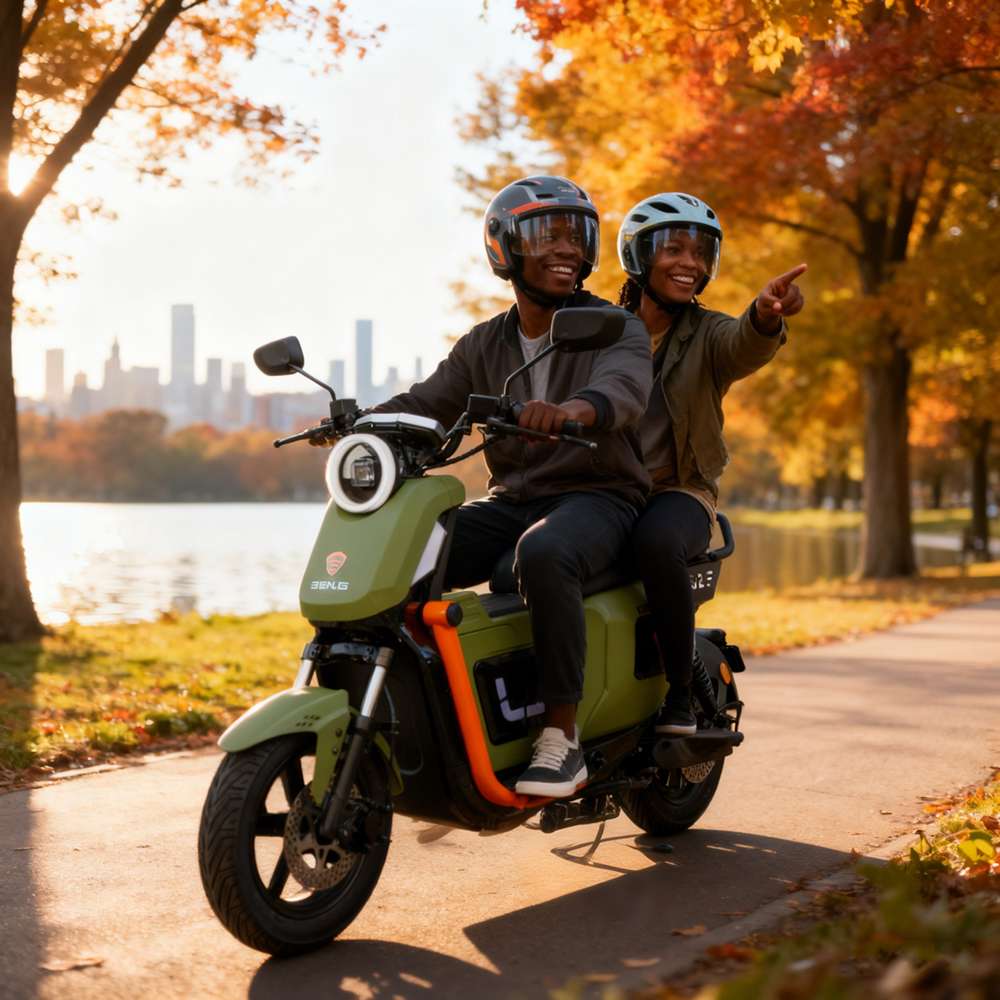
Terrain considerations:
- Flat cities (e.g., Jakarta, Bangkok, Mexico City): Scooters are ideal – step-through design, easy to ride, good storage under the seat.
- Hilly cities (e.g., São Paulo, Bogotá, San Francisco): Traditional motorcycles (straddle) or underbone with higher torque is better for hill climbing.
- Mixed terrain: Underbone offers a good balance of storage and performance.
Climate considerations:
- Hot and humid (Southeast Asia, parts of Latin America): Battery cooling is critical. LFP batteries perform better in high temperatures. Look for IP67 waterproofing for monsoon seasons.
- Cold climates (Europe, North America): Range drops in cold weather. Choose larger battery capacity and consider NMC or LFP with thermal management.
Use Case 2: Commercial Cargo / Delivery (Last-Mile Logistics)
Best vehicle types: Cargo electric tricycles, electric underbone with cargo racks, electric traditional motorcycles (straddle) with delivery boxes
Terrain considerations:
- Urban stop-and-go: Cargo tricycles offer stability and large carrying capacity. Underbone with rear cargo rack is also popular in Southeast Asia.
- Rural / rough roads: Cargo tricycles with 150mm+ ground clearance and larger wheels handle unpaved roads better.
Climate considerations:
- Rainy seasons (Southeast Asia, East Africa): Waterproof cargo boxes and IP67-rated motors are essential.
- Extreme heat (Middle East, parts of Africa): Lead-acid batteries may degrade faster; lithium or LFP with good thermal management is recommended.
Use Case 3: Passenger Transport (Moto-Taxi / Boda Boda / Tuk-Tuk)
Best vehicle types: Passenger electric tricycles (tuk-tuk style), electric traditional motorcycles (straddle) (for boda boda)
Terrain considerations:
- Flat urban areas: Passenger tricycles are stable and can carry 2-4 passengers. Electric traditional motorcycles (straddle) are faster and more maneuverable.
- Hilly / mountainous: High-torque motors and good suspension are critical. Motorcycles generally handle hills better than tricycles.
- Narrow streets (old cities): Motorcycles are more maneuverable; underbone is a good compromise.
Climate considerations:
- Rainy climates: Passenger tricycles with roofs offer weather protection – a major selling point.
- Hot climates: Open tricycles offer better airflow; motorcycles allow riders to feel the breeze.
Quick Reference Table – Vehicle Type by Region and Use Case
| Region | Dominant Fuel Type | Recommended Electric Type | Key Use Case |
|---|---|---|---|
| Southeast Asia | Scooter / Underbone | Electric Scooter, Electric Underbone | Daily commuting, delivery |
| India | Traditional Motorcycle (Straddle) | Electric Traditional Motorcycle (Straddle) | Commuting, passenger, light cargo |
| China | Straddle / Underbone / Scooter | All types (sourcing hub) | All use cases |
| Europe | Mid-large straddle / Scooter (South) | Premium Electric Straddle, Electric Scooter | Leisure, commuting |
| North America | Large straddle | High-performance Electric Straddle | Leisure, recreation |
| Latin America | Mid-displacement straddle | Electric Straddle, Electric Scooter | Commuting, recreation |
| Africa | Straddle / Underbone (100-250cc) | Electric Straddle, Electric Underbone | Commercial passenger, cargo |
Conclusion: Match the Vehicle to the Market, Not the Other Way Around
The biggest mistake new importers make is falling in love with a vehicle before understanding whether their market will accept it. A high-performance electric traditional motorcycle (straddle) that sells well in Europe will struggle in Indonesia. A cheap electric scooter that dominates Vietnam will fail in Brazil.
BENLG understands these regional differences. We manufacture a full range of electric motorcycles and tricycles – traditional (straddle), scooter, underbone, passenger tricycle, cargo tricycle – and we work with importers to match the right products to the right markets. With over 20 years of export experience to over 65 countries, we know what sells where.
👉 Ready to discuss your market? Contact BENLG for a consultation tailored to your region.
BENLG – Electric mobility, built for your market.
Featured BENLG Models for Sourcing & Wholesale
Cargo & Logistics
BENLG Harvest Cargo Tricycle
The ultimate B2B workhorse designed for small businesses and last-mile logistics. Engineered with a heavy-load chassis, a high-torque electric motor, and a robust cargo bed to withstand demanding daily commercial operations.
Commercial Delivery
BENLG Delivery Scooter
A high-capacity, commercial-grade electric scooter optimized for fleet logistics and gig-economy food delivery. Equipped with heavy-duty cargo racks and long-range battery options to ensure continuous revenue generation.
Daily Urban Commute
BENLG U2 Electric Scooter
The perfect personal commuting solution for global urban markets. Combining a sleek modern aesthetic with highly efficient, low-maintenance components, the U2 is an attractive consumer choice for cost-conscious riders.
Retro Urban Commute
BENLG LEO-1 Electric Scooter
A retro-styled electric scooter built for comfort and daily city riding. Features NFC card unlock, spacious under-seat storage, a plush wide seat, and dual disc brakes for a smooth, confident commute.


