


Fastest Electric Scooter Motorcycles: The 2026 Top 10 by Top Speed
Disclaimer: BENLG is an electric two- and three-wheeler manufacturer. This guide provides objective information on seated electric scooter motorcycles, their published performance figures, and the verification points that matter to importers and fleet buyers. No model on this list is a BENLG product.
Why “Fastest Electric Scooter” Means Two Different Vehicles
Few searches in the electric two-wheeler market are as ambiguous as fastest electric scooter. The phrase splits into two completely separate product categories, and they do not compete with each other.
In the United States, scooter almost always means a stand-up kick scooter: a foldable deck with no seat, no registration plate and no licence requirement in most states. In Europe, India, and much of Latin America, the same word describes a seated, step-through machine with a floorboard, a proper seat, two-up capability and a licence plate.
This article covers the second category only — what we call the electric scooter motorcycle. Every model below is a seated electric scooter with a step-through or underbone chassis, registered as an L1e-B or L3e vehicle depending on the market. If you are looking for stand-up hyper-scooters, this is not that list.
Rankings are based on manufacturer-claimed top speed, taken from official specification sheets, press releases and investor filings. Where a manufacturer publishes a GPS-verified figure alongside its dashboard reading, both are shown. Where published figures differ between markets or model years, that difference is stated rather than averaged away.
1. What Counts as an Electric Scooter Motorcycle
Before the rankings, it is worth fixing the category boundaries, because suppliers in this segment use overlapping terminology and buyers regularly end up comparing machines that are not in the same class.
In the EU, vehicle categories are set by Regulation (EU) No 168/2013. The thresholds below are the legal definitions, not market averages — and note that the power figure is maximum continuous rated power, not peak power:
| EU category | Max continuous rated power | Power-to-weight | Max design speed | Licence (min. age) |
|---|---|---|---|---|
| L1e-B — moped | 4 kW | — | 45 km/h | AM (16) |
| L3e-A1 — light motorcycle | 11 kW | 0.1 kW/kg | No limit | A1 (16) |
| L3e-A2 — medium motorcycle | 35 kW | 0.2 kW/kg | No limit | A2 (18) |
| L3e-A3 — motorcycle | No limit | — | No limit | A (20 with 2 yrs on A2, or 24) |
Two things follow from this table. First, the category is determined by continuous rated power, so a vehicle can sit in an 11 kW category while its motor delivers considerably more for short bursts — a point we return to in section 4. Second, this is the EU framework only. Other markets classify two-wheelers differently: Japan uses engine displacement for combustion bikes and rated output for electric ones; Singapore uses displacement or electric power output; Australia uses a learner-approved model list with a displacement ceiling and a power-to-weight cap; China uses displacement or rated motor power; and most US states do not sub-classify motorcycles by power at all.
Two clarifications matter here. First, a central spine does not disqualify a scooter. Many European and Indian models — including several on this list — place a frame spine or battery tunnel along the centre of the floorboard, so the rider’s feet rest either side rather than on a single flat platform. These remain step-through scooters: the rider is seated rather than straddling, there is no fuel tank between the knees, and the machine is ridden like a scooter, not like a motorcycle.
Second, the “ADV” label is a positioning exercise, not a structural one. Several manufacturers market urban-ADV scooters that borrow the visual language of adventure motorcycles. Buyers should check the chassis type and foot position rather than the marketing name.
A note on cross-over models: the ADV scooter
One cross-over category is worth naming explicitly, because it is frequently mistaken for a separate class: the ADV scooter. These are step-through scooters built with adventure-styling and capability elements layered on top of a conventional scooter platform — longer-travel suspension, increased ground clearance, dual-purpose tyres, a more upright riding position and bodywork borrowed from adventure motorcycles.
Structurally they remain scooters: the rider is seated rather than straddling, there is a front footboard, and there is no fuel tank between the knees. Honda’s ADV350 is the best-known European example of the format; among the models ranked below, Horwin markets its Senmenti 0 as an “urban ADV”. The ADV label describes intended use and styling, not chassis type — which is why an ADV scooter is still classified, registered and ridden as a scooter.
For manufacturers building ADV-styled scooters for commercial and utility applications, the format is a genuine segment in its own right — see our ADV scooter range for an example of how the layout is applied to fleet-oriented vehicles.
2. The Ten Fastest Seated Electric Scooter Motorcycles
The ranking below is by manufacturer-claimed top speed. Acceleration is given per model rather than in a shared column, because manufacturers do not agree on a single benchmark: European brands typically publish 0–50 km/h while Indian brands publish 0–40 km/h. Placing the two in one column would misrepresent both.
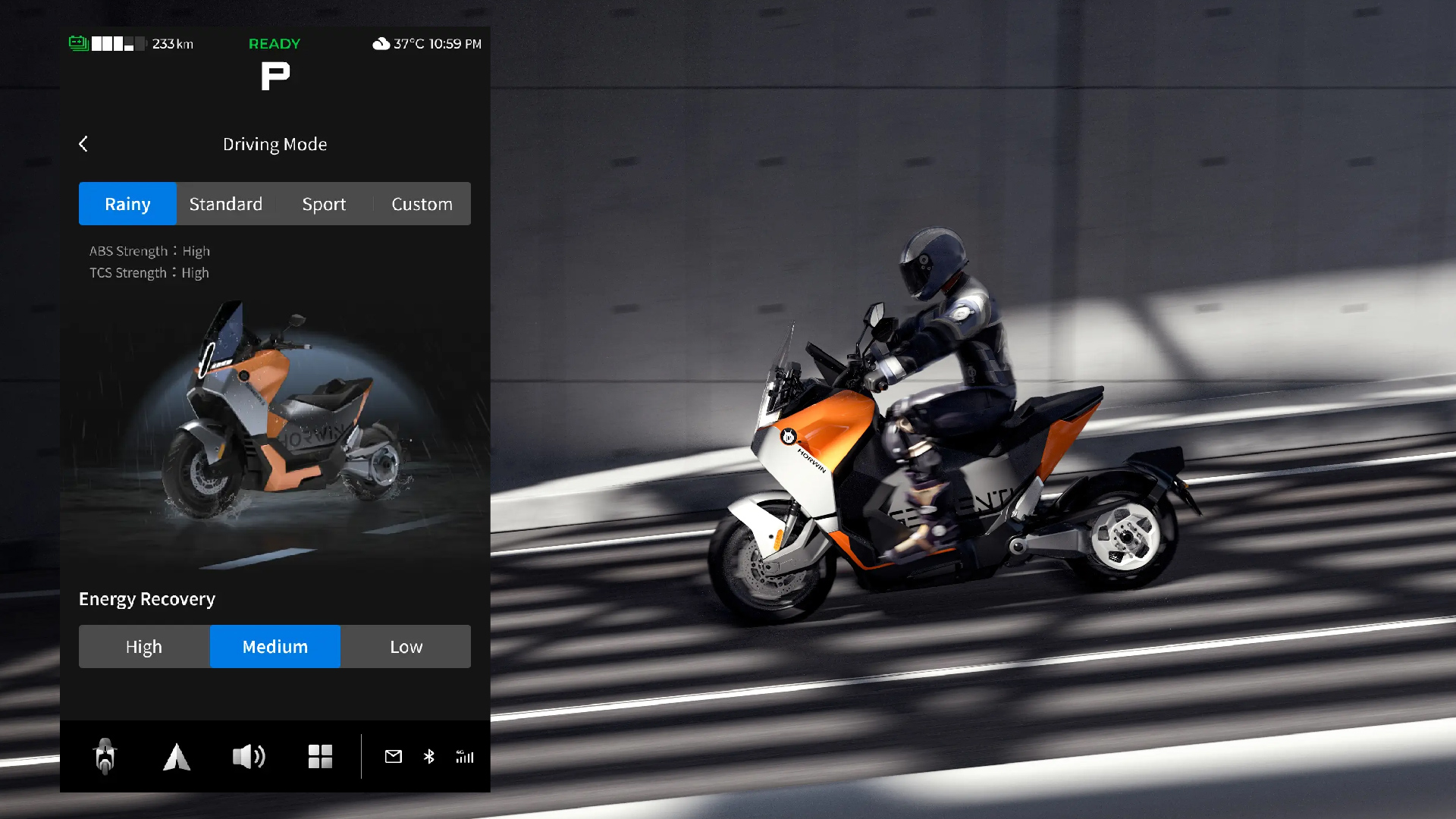
Horwin Senmenti 0
200 km/h
74 kW
16.9 kWh
China
About the maker: Horwin (号外) is a Chinese electric two-wheeler manufacturer headquartered in Changzhou, Jiangsu, with a European sales operation based in Austria. The company develops its own integrated chassis platform and holds development partnerships with European custom builders; its product range spans high-performance models and a mainstream European line.
The Senmenti 0 leads this list by a clear margin. Horwin’s official specification page quotes a 200 km/h top speed, a 74 kW peak output and a 16.9 kWh battery on a 400 V architecture — figures closer to a full-size electric motorcycle than to a conventional scooter. Two caveats belong with those numbers: Chinese regulatory filings for the production version list a 285 kg kerb weight and a 35 kW rated output, against earlier promotional figures of 185.5 kg and 74 kW. Treat the headline figures as provisional until the certified production specification is published. Structurally the chassis is an underbone step-through design with a large front footboard and the battery housed in the floor.
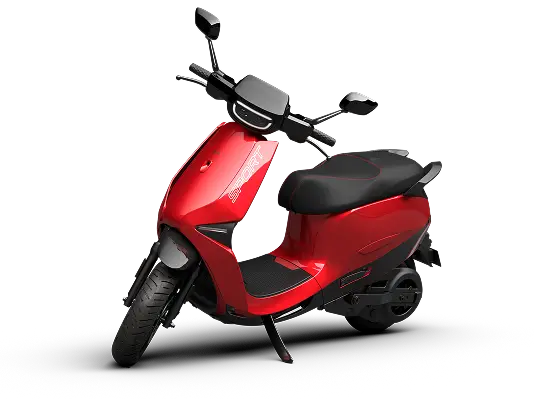
Ola S1 Pro Sport
152 km/h
16 kW peak
0–40 km/h 2.0 s
India
About the maker: Ola Electric is India’s largest electric two-wheeler manufacturer by volume, listed on Indian stock exchanges and vertically integrated — it develops its own motors, battery cells and vehicle software in-house. Its S1 platform is the highest-selling electric scooter line in India.
Ola’s flagship sport variant is the fastest seated scooter currently offered by an Indian manufacturer. The company’s own investor announcement quotes a 152 km/h top speed with 16 kW peak output, a 5.2 kWh pack using in-house 4680 cells, and a claimed 0–40 km/h time of 2.0 seconds. For a buyer, the interesting part is the structure of the offer rather than the headline speed: a 13 kW rated motor, 34 litres of underseat storage, 14-inch wheels, and an introductory price of ₹149,999 with deliveries starting January 2026. That places it in the same regulatory and price conversation as European 125 cc equivalents rather than in the premium maxi-scooter bracket.
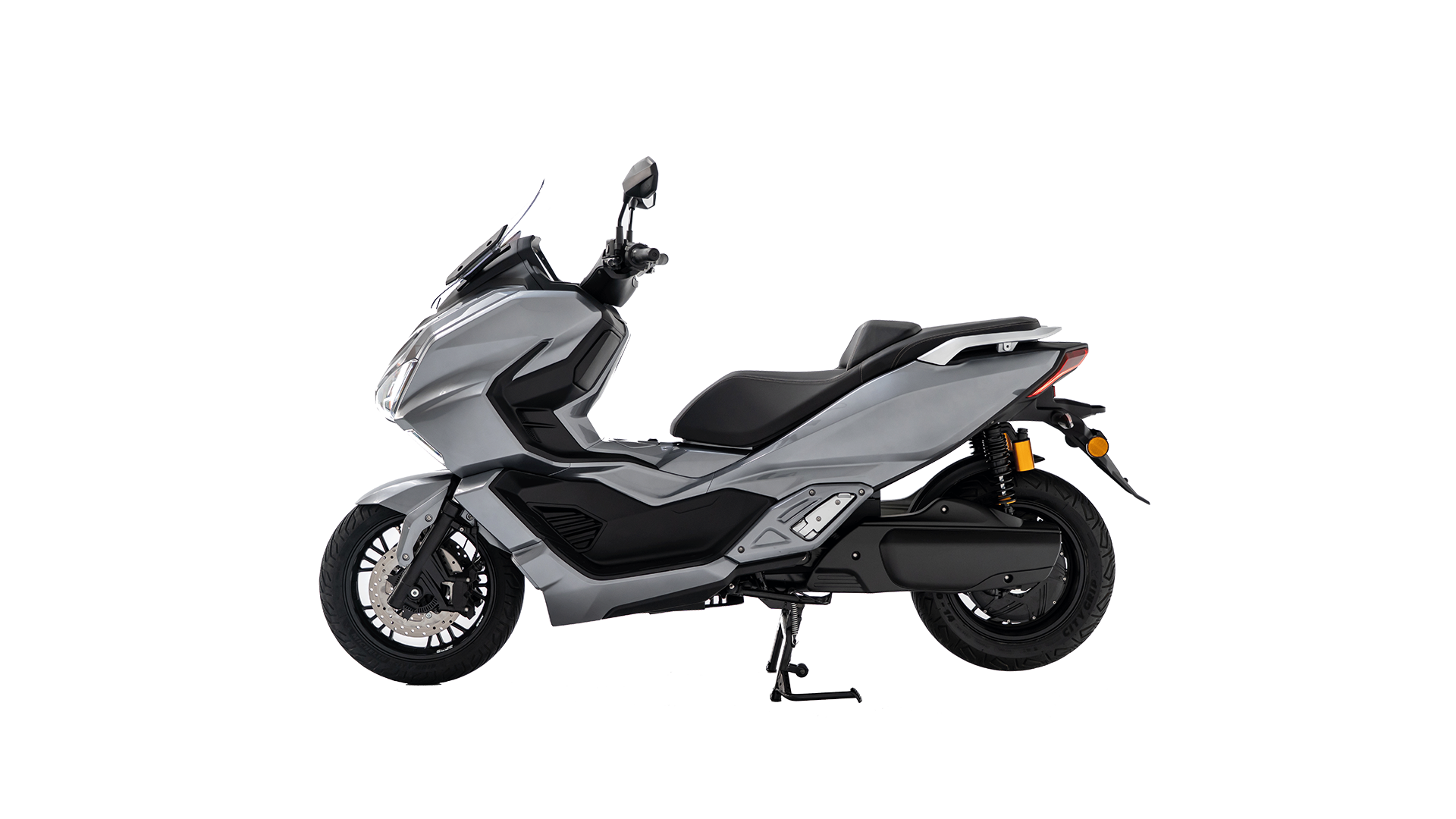
EFun LION X 180
145 km/h
11 kW
72V 180Ah
Italy
About the maker: EFUN Italia S.r.l. distributes its LION, DEER, PUSA and TIGER lines across the Italian and wider European market, with a dealer network and a reserved dealer portal. The brand targets the premium commuter end of the electric maxi-scooter segment.
EFun’s LION range tops out with the X 180, which the manufacturer’s official product page quotes at 145 km/h with an 11 kW motor and a 290 km range. Battery options are 72 V / 180 Ah or 72 V / 156 Ah, and the pack carries a five-year warranty. Charging from 15% to 85% takes around four hours. Equipment is pitched at the commuter end rather than the performance end: twin 260 mm front discs with ABS, a touchscreen display with CarPlay and Android Auto, and a boost mode for overtaking. The LION line is offered in four versions — X 180, M 150, S 117 and R 66 — and published top speeds differ between them, so confirm which version a quoted figure belongs to before comparing across suppliers.
Source: EFun official product page

Ola S1 Pro+
141 / 130 km/h
13 kW peak
0–40 km/h 2.1 s
India
About the maker: Ola Electric (see #2) — the S1 Pro+ is the flagship version of the same S1 platform.
This model is worth reading carefully, because Ola’s own numbers have moved. The launch announcement quoted 141 km/h; the current official product page lists 130 km/h. Both figures circulate in market coverage, and neither is wrong — they simply belong to different moments in the product’s certification and positioning. Specification as published: 13 kW peak, 5.5 kW rated, a 5.2 kWh 4680-cell pack, and a claimed 0–40 km/h in 2.1 seconds. Buyers writing a specification sheet should quote the figure that appears on the market’s own homologation documents rather than a launch press release.

TRINITY Saturn GT 300
140 km/h
22 kW peak
13.3 kWh
Germany
About the maker: TRINITY Electric Vehicles GmbH is a German manufacturer based in Lower Saxony, selling direct to consumers and through dealers. The company’s range is positioned at the maxi-scooter end of the market with a focus on large battery capacities.
The Saturn GT 300 pairs a 22 kW peak motor (11 kW continuous) with a 13.3 kWh CATL battery rated for roughly 1,300 cycles. The 11 kW continuous rating is the number that matters for licence category in most European markets. The chassis uses a central tunnel for the battery rather than a fully flat floorboard — a layout that costs some step-through convenience and returns a lower centre of gravity. TRINITY quotes a manufacturer range figure of 310 km, which is a manufacturer scenario rather than a standard test cycle and should not be compared directly with WMTC figures from other brands.
Source: TRINITY official website
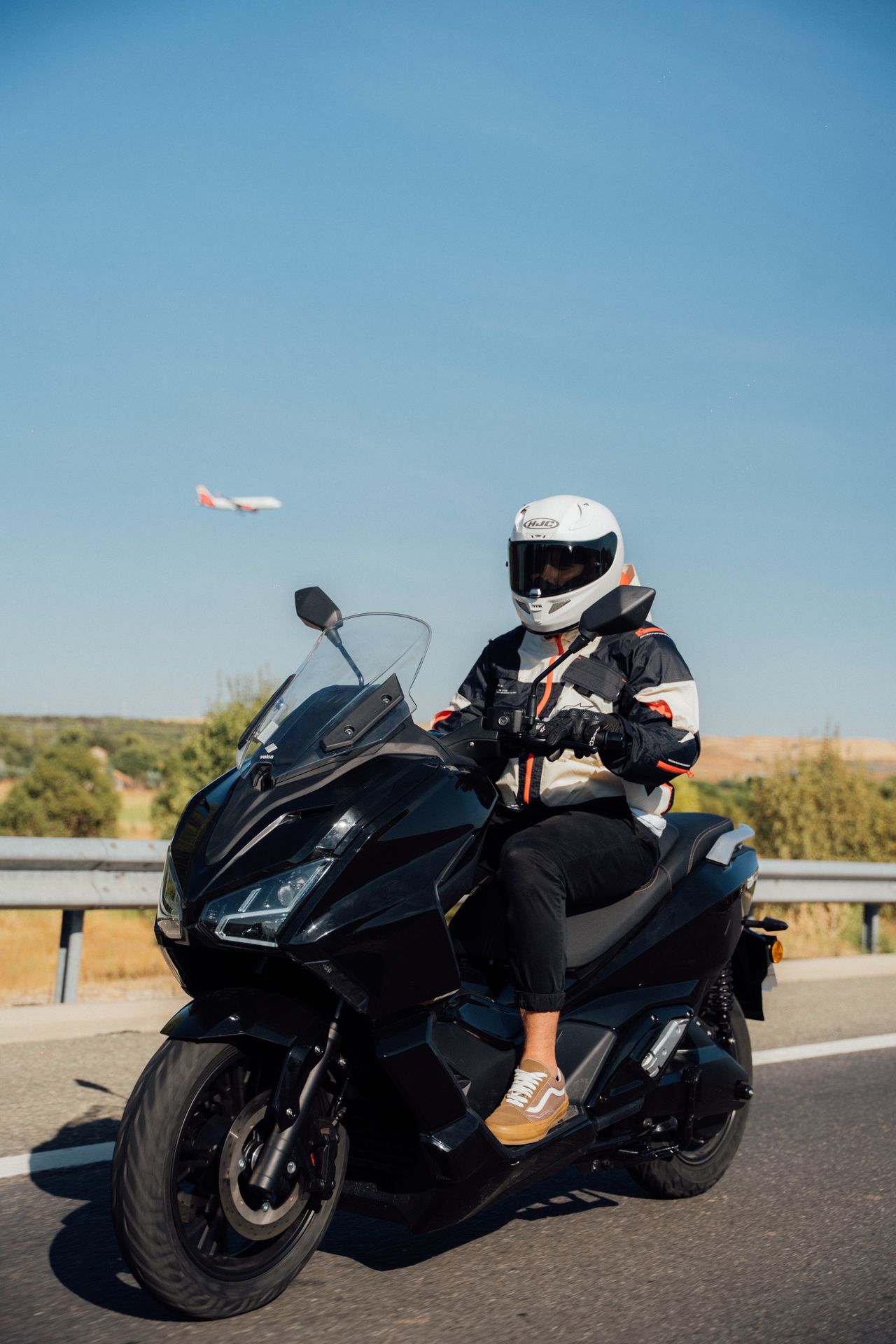
Velca EON
140 km/h dash / 134 GPS
18 kW peak
13 kWh
Spain
About the maker: Velca Motor (Rhino Electric Motors) is a Spanish manufacturer selling through its own online store and a dealer network in Spain and Portugal, positioned in the GT maxi-scooter segment.
Velca publishes both numbers on its own product page, which is unusual and useful: 140 km/h on the dashboard against 134 km/h GPS-verified. The gap is typical of the segment and is the reason buyers should ask suppliers for the measurement method behind any speed claim. Specification: an 11 kW rated motor with 18 kW peak, a 13 kWh CATL NMC pack (72 V / 180 Ah, 60 kg), three riding modes capped at 65, 100 and 140 km/h, and a 229 kg kerb weight. Velca also publishes real-world range tests from public road loops — 205 km on the M-40 and 151 km on the M-50 at over 120 km/h — which is a more honest presentation than a single homologation-cycle number.
Source: Velca official product page

Segway-Ninebot E300P
135 km/h
20 kW peak
0–50 km/h 2.49 s
China
About the maker: Segway-Ninebot is a Chinese company listed on the STAR Market, best known globally for personal mobility products; its electric two-wheeler division has expanded into higher-performance urban scooters such as the E-series.
The E300P is the fastest model here with a widely published acceleration benchmark: 0–50 km/h in 2.49 seconds, from a 20 kW peak motor. Top speed is quoted at 135 km/h with three battery packs installed; the same company-lab test quotes 0–100 km/h in 7.9 seconds. Two details matter for buyers. First, those figures are explicitly described by the manufacturer as laboratory measurements taken with three batteries fitted — performance with two packs is lower. Second, 0–50 km/h is a European-style benchmark and should not be placed in the same column as an Indian brand’s 0–40 km/h figure.

NIU NX Hyper
135 km/h
20 kW / 29 kW peak
0–50 km/h 2.45 s
China
About the maker: NIU Technologies is a Chinese electric two-wheeler manufacturer listed on Nasdaq, operating in over 50 countries with an emphasis on connected vehicle features and a large European dealer network.
NIU’s official launch release quotes the NX Hyper at 135 km/h, 20,000 W maximum motor power, 0–50 km/h in 2.45 seconds and 0–100 km/h in 7.5 seconds, with three 72 V / 28 Ah batteries. Later specification listings for the same model commonly quote 10 kW rated and 29 kW peak. That is a genuine discrepancy in published material rather than a rounding difference, and it is the kind of thing worth putting to a supplier directly. Whichever figure applies, the practical point stands: this is a three-battery machine, and range and performance depend on how many packs are fitted.
Source: NIU official press release

Nerva EXE II
130 km/h
19 kW peak
0–50 km/h 4.0 s
Spain
About the maker: Nerva is a Spanish manufacturer whose investors include BYD; it builds a GT scooter range around BYD LFP blade-cell battery modules, with distribution in Spain and an expanding European dealer network.
Nerva quotes the EXE II at 130 km/h with an 11 kW rated mid-drive motor and 19 kW peak, drawing from three BYD LFP blade modules totalling 7.83 kWh. LFP chemistry is the notable choice here: lower energy density than NMC, but longer cycle life — the pack is rated for 6,000 cycles. Acceleration is quoted at 0–50 km/h in 4.0 seconds, which is deliberately less aggressive than the Indian and Chinese performance models above. Underseat storage takes a full-face helmet. For fleet buyers prioritising battery longevity over peak figures, this is the most directly relevant model on the list.
Source: Nerva official product page

NIU NQiX 1000
125 km/h
15.5 kW peak
72V 28Ah ×3
China
About the maker: NIU Technologies (see #8) — the NQiX 1000 extends the same European NQiX line, which NIU positions in both L1e and L3e classes.
Announced at EICMA 2025, NIU’s official release quotes 15,500 W peak power, a 125 km/h top speed, over 100 km of range and three removable 72 V / 28 Ah batteries, with a European launch in Q3 2026 at €6,499. NIU places it in the L3e class. The removable battery design is worth flagging for operators without depot charging: packs can be carried indoors, which changes the infrastructure cost of running a fleet considerably.
3. How to Read a Top-Speed Claim Before You Buy
The gap between a published top speed and what a vehicle actually does on the road is the single most common source of disputes in this segment. Four factors account for most of it.
- Dashboard versus GPS. Dashboard readings are routinely optimistic. Velca publishes both for the EON — 140 km/h indicated against 134 km/h GPS — and that 4% gap is at the conservative end. Ask suppliers which figure they are quoting.
- Battery configuration. Several models on this list achieve their headline speed only with the maximum number of packs fitted. Segway states this explicitly for the E300P; NIU’s three-battery models behave the same way.
- Payload, gradient and state of charge. A 135 km/h claim measured with a 75 kg rider on a flat road, at 90% charge, does not translate to a loaded cargo configuration at 30% charge on a 12% gradient.
- Market-specific tuning. Regulatory limiters and type-approval requirements mean the same model is often sold with different top speeds in different markets. Naxeon’s I AM. Pro, for example, is published at 115 km/h internationally and 110 km/h on its German site.
The practical remedy is a specification clause requiring the supplier to state the measurement method, battery configuration and rider load behind every performance figure — and to confirm the figure that appears on the vehicle’s homologation documents for your market.
4. Registration Category Decides More Than Speed
In most markets, the number that determines what your customer can legally do with a vehicle is not its top speed but its continuous rated power and the resulting vehicle category. Two scooters with similar acceleration can therefore land in different licence brackets and different insurance bands.
Why continuous power, not peak power, is the legal number
For electric vehicles, the EU defines maximum continuous rated power by reference to the “maximum 30 minutes power” test method set out in UN Regulation No. 85 — the output the motor can sustain for 30 minutes under specified conditions, measured as an average. EU Regulation 168/2013 adopts that measurement when it sets the thresholds in the table above.
Two clarifications that are frequently stated incorrectly in market coverage:
- R85 itself applies to M and N category vehicles (cars and trucks) — not to motorcycles. L-category two-wheelers are governed by EU 168/2013, which references R85’s measurement method rather than applying R85 directly. Electrical safety for L-category vehicles is covered separately (UNECE R136 for batteries).
- The 11 kW threshold for L3e-A1 refers to the maximum continuous rated power, not to peak power. A motor’s short-duration peak output can be substantially higher than its continuous rating — that is normal for electric drive systems and is how the category is designed, not an exception to it. The manufacturer’s obligation is to declare the continuous rating accurately under the R85 test; declaring a continuous rating lower than what the vehicle can actually sustain would not be compliant.
For an importer this has a practical consequence: ask for the continuous rated power as declared on the certificate of conformity, not the marketing peak figure, because the former is what the vehicle is registered against.
Car-licence exemptions for 125 cc class vehicles are national, not EU-wide
Several EU member states allow holders of a car licence (category B) to ride A1-class vehicles without taking a separate motorcycle test — Germany (B196 extension), Spain (after three years), Italy, France, Belgium, Austria, Poland and others operate variations of this. Conditions differ substantially: some require years of B entitlement, some require classroom and practical training, and some are restricted to automatic transmissions.
Three caveats matter for anyone planning around this. First, these are national exemptions, not an EU-wide right — roughly half of member states have one and some, including the Netherlands, have none. Second, in almost every case the exemption applies only inside the issuing country; riding the same vehicle across a border generally requires a full A1 licence. Third, the exemption is typically conditional on the vehicle meeting the full A1 technical definition — displacement, power and power-to-weight ratio.
For a market-by-market breakdown of speed limits, classification thresholds and the low-speed/high-speed EV split — including the EU and UK, the US state-by-state picture, and the position in India, Canada, Australia and Japan — see our electric moped top speed guide.
5. What Fleet Buyers Should Weigh Instead of Top Speed
A 200 km/h scooter is not inherently a better commercial vehicle than a 125 km/h one, and for most fleet applications the ranking above is close to irrelevant. The models in this list differ far more in the following areas than they do in top speed.
- Battery chemistry and cycle life. NMC delivers more energy per kilogram; LFP delivers more cycles. Nerva’s 6,000-cycle LFP pack and TRINITY’s 1,300-cycle CATL pack represent very different total-cost-of-ownership profiles over a five-year fleet life.
- Charging architecture. Onboard charger capacity, AC versus DC input, and whether packs are removable determine how many vehicles a depot can turn around per day.
- Spare parts and service intervals. A model with no local parts network costs more to run than one with a slower headline figure. Ask for the parts catalogue and service schedule, not the press release.
- Payload and two-up certification. A 180 kg rated payload with two-seat homologation supports passenger and delivery use; a single-seat performance scooter does not.
- Homologation coverage. A vehicle certified for one market may not be certifiable in another without modification. Confirm coverage before contracting.
If you are specifying a motor for a particular duty cycle rather than evaluating complete vehicles, the selection factors are different again — see our guide to electric motorcycle motor selection and, for power-class trade-offs, 3000W high-speed electric motorcycles.
6. Frequently Asked Questions
Is a 135 km/h electric scooter faster than an electric motorcycle?
It depends which motorcycle you put it against. A 135 km/h scooter is quick for the class — most mopeds and commuter scooters run 45 to 90 km/h — but production electric motorcycles in the same price band commonly reach 160 km/h and above, and the fastest of them exceed 200 km/h. The difference is the platform, not the motor: small wheels, a short wheelbase and bodywork shaped for city speeds limit how stable a scooter remains at 135 km/h.
Why is my electric scooter’s dashboard speed higher than its GPS speed?
Manufacturers calibrate speedometers optimistically, and regulations in most markets permit a positive tolerance. Velca’s EON is unusual in publishing both figures — 140 km/h indicated, 134 km/h GPS.
How fast can electric scooters go?
Production electric scooters span a wide range. Commuter models built to the moped class run 45 to 60 km/h, 125 cc equivalents typically reach 80 to 100 km/h, and performance scooters with larger packs and reinforced frames push 110 to 135 km/h — which is where most of this list sits. The ceiling for the class today is around 200 km/h, and only a handful of low-volume machines get there. Past that point the limit stops being the motor and becomes wheel size, wheelbase and braking.
Do I need a motorcycle licence for a 125 km/h electric scooter?
In most European markets, yes. A machine in this performance band falls into L3e, which needs an A1 licence where output stays within 11 kW and an A2 or A above that, plus type approval, registration and insurance. A category B car licence does not cover it. Requirements differ by country, so confirm against local rules.
Are the top speeds in this list independently verified?
Most are manufacturer-claimed figures taken from official specification sheets, press releases or investor filings; the source for each model is linked above. Where a manufacturer publishes a GPS-verified number alongside a dashboard reading, both are shown. Independent verification exists for some models but is not consistently available across the segment.
About BENLG
BENLG is an electric two- and three-wheeler manufacturer based in Dongguan, China, producing electric motorcycles, mopeds, seated electric scooters and electric cargo tricycles for distributors, importers and fleet operators. Our product range is engineered for commercial and utility applications — delivery fleets, passenger transport and cargo logistics — in Southeast Asia, the Middle East, Africa and Latin America.
No BENLG model appears in the ranking above. The models listed are performance-oriented consumer vehicles from other manufacturers, and comparing them with our range would not be a like-for-like comparison.
If you are sourcing electric two- and three-wheelers for a commercial application — and need documentation on homologation coverage, battery specification, payload ratings and spare parts supply — contact our team to discuss your market requirements.

Ying Yong
Author
Electrical Expert
BENLG R&D Team – Electrical Components Specialist
Ying Yong has over two decades of experience in the electric two‑wheeler industry. As an electrical components expert in the BENLG R&D team, he specializes in the design and optimization of core electrical systems, including motors, controllers, and battery management. His deep technical expertise and long‑term commitment have contributed to BENLG’s reputation for reliable and innovative EV solutions. He works closely with the engineering team to ensure that every component meets the highest standards of performance and durability for diverse global markets.


